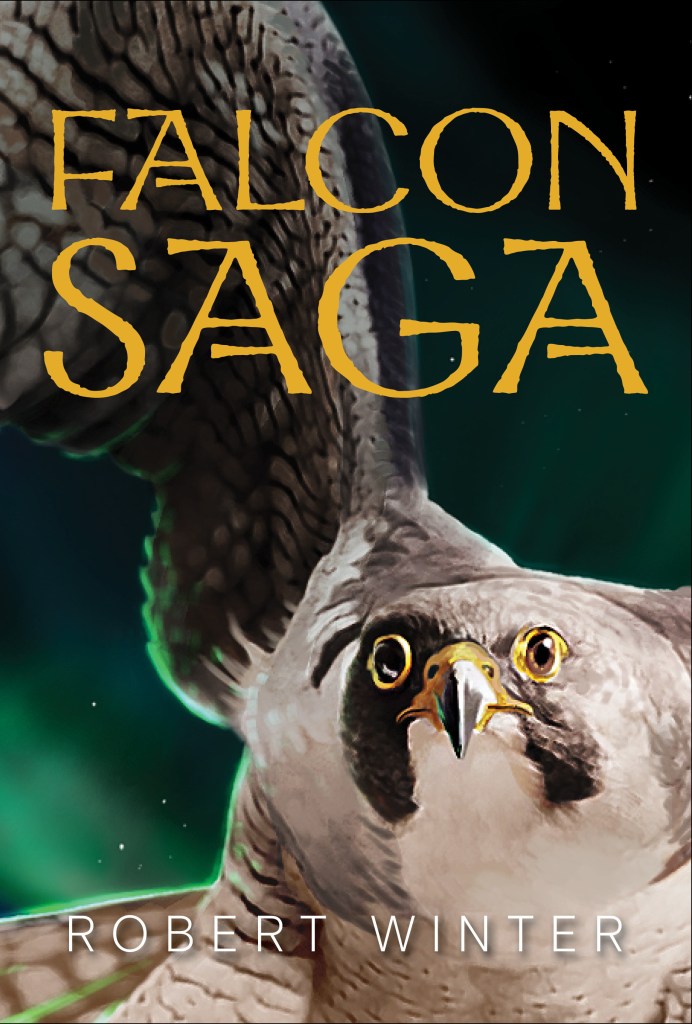
Falconsaga made it on my reading list as one of the rare books about queer men written by a queer man that I’ve found so far published this year. While I thought the representation did a great job of presenting gay men as humans independent of their romantic and sexual identities, I generally found the book to be on the disappointing side, especially after a few Urban Fantasy books that really blew me away. However, for those looking for something that dives into Icelandic folklore, I think it would be a great fit. I’m also very much in the minority so far based on other reviews, so take my opinions with a grain of salt.
Read if Looking For: prophecies, tragic backstories, sinister family members, Icelandic myth, grounded gay representation
Avoid if Looking For: tightly plotted books, subtle foreshadowing, page-turners, critical takes on magical age-gap relationships
Elevator Pitch:
Magnús is an elf with a mission to defend humanity, and still partially in mourning for his human love of decades ago. Altair is a PHD student hoping to construct power plants. When he is pressured to travel to Iceland for his dissertation, Magnús (who lives in Iceland) gets warned of a prophecy that if he doesn’t keep Altair safe, Iceland will be destroyed. He masquerades as a professional driver to show Altair around, all while trying to dig deeper into the mystery of Altair’s history, and of the danger threatening his island home.
What Worked For Me
Despite overall having a negative impression of this book, I want to call out that this book does a great job of making Icelandic folklore come alive in a way that feels very respectful of the original myths and stories (full disclosure, I’m not Icelandic so I can’t confirm accuracy in any form, but the writing feels very earnest in this regard). You’ll mostly encounter trolls, hags, and elves in this book, and the entire story feels like it couldn’t be set anywhere other than Iceland. And that’s not something I see a lot from Urban Fantasy. It’s quite rustic, for all that it mostly takes place in major cities.
Another make in the positive column was that Magnús and Altair both feel like healthy and authentic representation. This is a slow burn romance story, and Winter avoided leaning into any classic character tropes that gay men about to fall in love get pigeonholed into. As much as I love sarcastic asshole leads or grumpy/sweet dynamics, it was relieving to have a pair of lead characters who didn’t feel like carbon copies of other characters I’ve read in the past few months. To be fair, I think they both ended up a little on the boring side, but I can’t level any criticisms about problematic depictions of gay men. That last bit is something that I get to say depressingly little, and is worth celebrating.
What Didn’t Work For Me
Unfortunately, this book never quite left the ground for me. If it hadn’t been so short (it’s a little over 200 pages, with pretty generous margins and more than a few blank sheets of paper) I probably would have set it aside. The book leads with classic prophecies of doom, and with a character going on a journey to a new land, but it failed to really deliver on those ideas. I never felt the creeping dread of a tragedy looming over Iceland, or of Altair really struggling with being thrust into this new world. Part of this is because the plot itself was meandering, including many interludes that felt very out of place in a book this short. The rising action wasn’t quite built on miscommunications, but it was close enough to raise eyebrows on my end.
The ending of the book felt more or less arbitrary, without having resolved any major plot or character arcs. Having not read the sequel (which came out only months after), I feel like this should have been published together in a single volume, as the plot and character arcs just didn’t line up for this story. Half the book was spent on setup of major events, but I needed some sort of tangible payoff in this book to keep me engaged.
Putting aside odd pacing and publishing choices, I generally found the story to be predictable and overwritten. Dialogue oftentimes felt out of place or robotic, the fight scenes never quite had the frantic tension I would hope for, and the foreshadowing in the book was too heavy handed for it to set up for a twist, but not ominous enough to create a sense of horror.
Again though, most others who have read this book seem to really love it, and I’d encourage you to read their reviews for a counterpoint to my thoughts.
In Conclusion: A book that generally fell short on most counts for me, but that refreshingly didn’t play into gay stereotypes so common in M/M Urban Fantasy
- Characters: 2
- Worldbuilding: 3
- Craft: 3
- Themes: 2
- Enjoyment: 2
 Marked for Plot
I looked around at the author. Seems they’ve written quite alot and have a decent following so far, Maybe this book just fell short. Speaking of short, 200 pages is rather on the small side. I was kicking myself for only getting to about 270 pages, I couldn’t imagine going less than that.
LikeLike
I’m a big fan of novellas, so short doesn’t bug me. I like how they force authors to really focus in on specific elements, and tend to find that they make more interesting and ambitious choices (on average) than full length novels. This book felt more like a single novel cut in half, both in writing style, but also in plot arcs. It’s an author I do want to try more of, and I’m curious if I’d enjoy their work more where the romance is a bit more front and center
LikeLiked by 1 person