
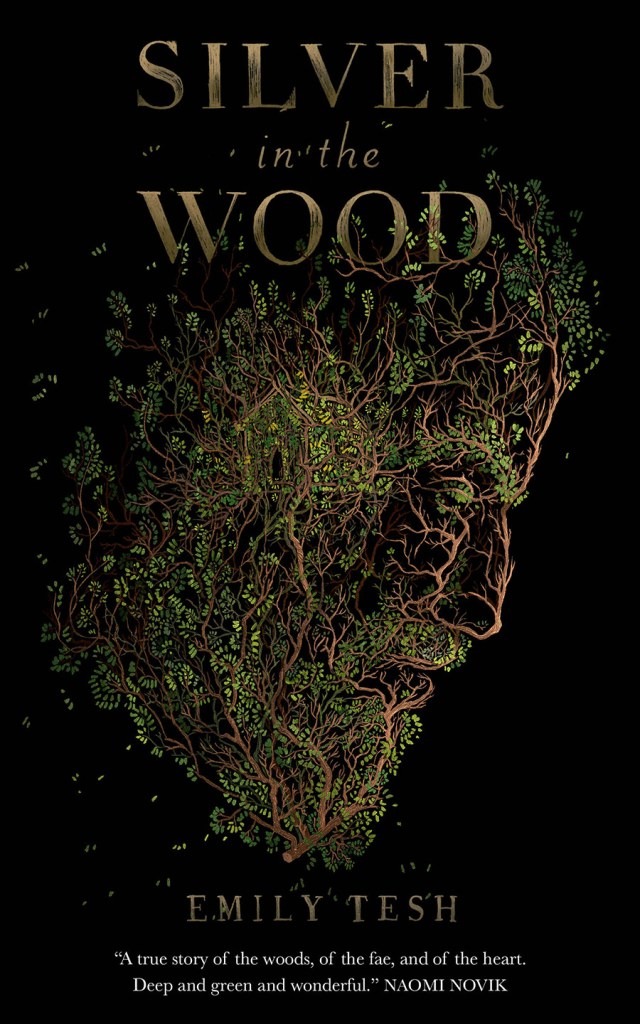
Silver in the Wood has been sitting on my bookshelf for a long time. Too long, to be honest. It has a sterling (and I think, well earned) reputation as an excellent novella featuring a gay lead, can be read in 1-2 sittings, and has immaculate vibes. It’s not a perfect book, but it was incredibly satisfying for the length of time I spent with it. Also, some of the best cover art I’ve seen in a good long while.
Read if You’re Looking For: stories invoking folklore, redemption, bossy mothers, romantic subplots
Avoid if You’re Looking For: flirting with chemistry, tightly plotted books, satisfying explanations
Elevator Pitch
Tobias is a woodsman. Or rather, he is a man of the woods, and has been for 400 years. He’s got some magic, but not as much as his Dryad friends, and mostly just tries to keep things quiet. Silver has purchased the woods and a bit more, and quickly sets to asking Tobias (and everyone else) far too many questions about local history. He particularly enjoys spending time with Tobias, but the weight of history presses down on Tobias, keeping him from accepting Silver’s overtures. In Greenhollow though, summer is dangerous, especially for pretty young men who are new to town.
What Worked For Me
To start off, this book earns a lot of points with its length. At 112 pages – but with a layout that means it probably should have run closer to 80 – and unembellished prose, this novel is a quick read. It’s rare for me to wish the author hadn’t cut off a solid fifth of the book, but Tesh did a great job of presenting a delightful story and avoiding the impulse to stretch things out unnecessarily. This alone makes me want to read more of Tesh’s writing.
There are a couple ways this story could have turned out, and the easy one would have been to write a traditional Romance plotline. I am exceedingly happy that didn’t happen. The romance is lurking on the edges, but Silver spends more time offscreen than on. Instead Tesh chose to center Tobias’ existence in the woods, and his reckoning with his history. In order for that central premise to be engaging, it means that Tobias needs to be compelling, and the woods need to be a character in their own right.
I’m happy to say that Tesh excelled at both.
To be clear, I don’t know that I’d say that Tobias is the most complex character in the world. He’s a bundle of tropes and stereotypes. The gentle giant; the silent woodsman; the immortal who has drifted apart from humanity, falling so far into routine that he forgets some basic things about what it means to be human; a tragic backstory; etc, etc. However, I think Tesh ties them together in a way that works. He’s not going to be winning awards for complexity of character or realism, but, in a story where folklore and tall tales play so much of a role, he’s just the right character to see the world through.
And the atmosphere of this story is just delightful. The woods, seen through Tobias’ eyes, carry both the slowness of plants and the vibrancy of life. At times, she invokes a dreamlike quality as Tobias slips in and out of time itself, succumbing to the needs of the forest in a way a simple human never could. This book captures a space, a small town, and the quiet of nature, in a really perfect way. And when the story transitions into something darker, as we delve into Tobias’ past and the woods begin to take on new meaning, that too feels like an extension of the melancholy and rot of the natural world.
What Didn’t Work for Me
As I said earlier, it’s good this book didn’t center romantic development, because Silver and Tobias have zero chemistry. I put this down mostly due to Tesh’s struggles with dialogue in this book, which oftentimes feel overly scripted or unnatural. It was common for me to be told that Silver was flirting with Tobias, only for me to return to the page before to reread the interaction in search of something I’d missed on my first pass.
This woodenness extends to Silver’s mother as well. It felt very much like both she and Silver existed to further Tobias’ plot, instead of as people in their own right. Considering that Silver is the protagonist of the sequel, this leaves me a bit hesitant about it – though I will definitely be reading it.
Finally, there were a few plot elements that I just flat out didn’t understand. I can accept that they were true, but I think Tesh leaned a bit too much on handwaving things because magic, because it sapped some of the tension out of the external plot introduced in the midpoint of the story. Thankfully, Tobias’ internal struggles are much more interesting and cohesive to the story, and also more central to the plot.
With how brief the story is, I found these flaws eminently forgivable. I had a great time with this story.
In Conclusion: a moody story with great atmosphere, but a stilted romance subplot
- Characters – 3
- Worldbuilding – 5
- Craft – 3
- Themes – 4
- Enjoyment – 4
 Marked for Plot
One thought on “Silver in the Wood (Greenhollow Duology #1)”