
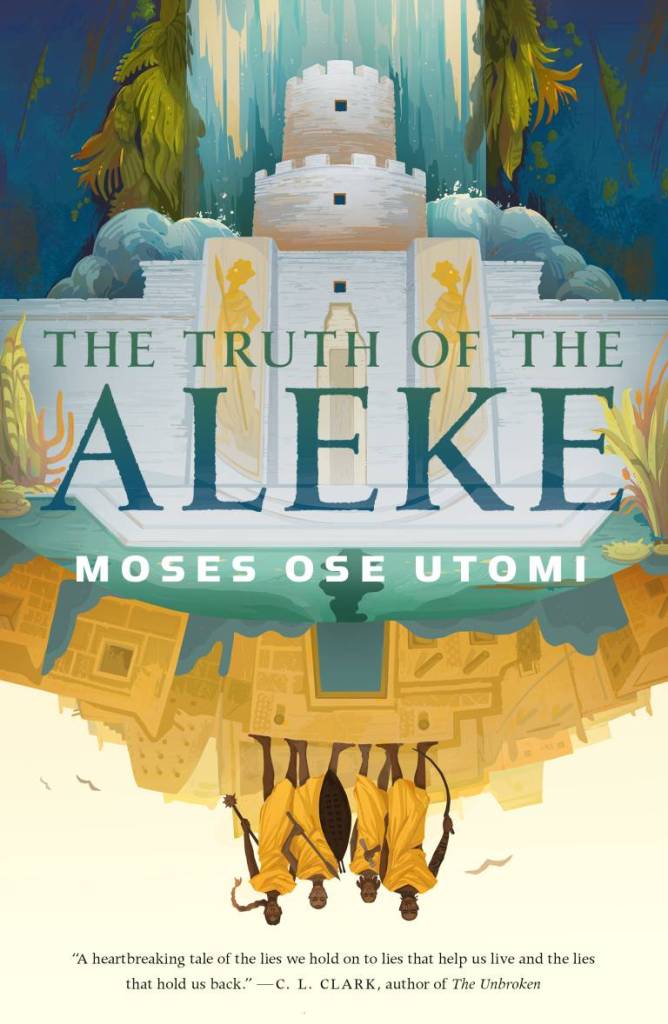
The Lies of the Ajungo captured my attention with how deftly Moses Ose Utomi mixed fable elements into a simple, but tightly written novella with an entrancing setting and eye for exploring power as a motif. The Truth of the Aleke continues that journey, jumping forward several hundred years, abandoning the folktale-esque vibes for something more traditionally ‘epic’ while still maintaining the thematic core of the series.
Read if Looking For: interesting takes on traditional story beats, fallible characters
Avoid if Looking For: deep worldbuilding or complex magic systems
Elevator Pitch:
Several hundred years after the events of The Lies of Ajungo, The Cult of Tutu (the now-dead main character of Lies) has conquered the entire desert. Only the City of Truth stands free, relying on its warrior-seers to protect the city from the onslaught. Osi is a peacekeeper who dreams of bigger and better things, and his impulsivity leads him far closer to the action than he ever thought was possible. He wants to save his city, but Truth is not always as simple as it seems.
What Worked for Me
This book struck a more serious tone than its predecessors. The tonal change is tangible from Lies. No longer do things come in convenient sets of three, and no longer are there neat and tidy resolutions to every problem presented. In the author’s afterward, he notes that his experiences after 9/11, and his complex feelings about America’s military reaction to a terrorist attack, served as an inspiration point for this story. It’s a much more thematically ambitious story than it’s predecessor. I appreciated this choice as a way of raising the stakes without expanding the core scope of the story’s setting – the most common choice I see authors make in second books.
I also appreciated the significant gap in time between books. It leaves enough unexplained space to allow him to play with new ideas and set pieces while keeping a core DNA of the series in tact. It also allows him to develop some ideas of how past events can be leveraged by many different forces for their own benefit, regardless of whether or not their representation of the past is true. It also allows the middle book to shine as an individual entry with a complete narrative, instead of awkwardly trying to build on book 1 while moving set pieces for a grand finale in the next entry. It’s a smart choice that I wouldn’t mind seeing more often.
The third and final book will be set another 500 years in the future, and I’m excited to see how the author takes the events of books 1 and 2 and reinterprets them as they grow warped throughout the passage of time. It’s a sequel I’m eagerly anticipating.
What Didn’t Work for Me
As with Lies, I found that a core plot point wasn’t resolved or explained to my liking, serving as convenient more than plausible. I do think that the twists were foreshadowed well, though some will say too well. I appreciated the heavy handedness of Utomi marking the turns of the story ahead of time, and think it served as a way to highlight Osi’s own foolishness as a character flaw, instead of a stereotypical protagonist quirk that can be brushed off as flavor text.
More pressingly though, I wish that Utomi had been more willing to flex on length. Even at 25% longer than the previous entry, 100 pages wasn’t enough for this story to get the development it really needed. Because of its more serious tone, I felt the thin worldbuilding and plotting as a detriment more firmly than in the fable-esque first book. It’s rare I think a book should be longer, but this one could have used another 20-30 pages and still lived comfortably in novella territory.
In Conclusion: A sequel that uses time skips well, but need some more depth to its plot and setting.
- Characters – 4
- Worldbuilding – 4
- Craft – 4
- Themes – 4
- Enjoyment – 4
 Marked for Plot
One thought on “The Truth of the Aleke”