
Cyberpunk is not a genre I’m particularly familiar with. I don’t watch a ton of movies, haven’t played the video games, and am only versed enough to know the basic premises of a corporate world filled with technologically enhanced humans slowly being corrupted by power (or trying to plow the power holders up in bombs). At least I think? I’m still a bit unsure.
Anyways, Snow Crash was the pick for an in-person book club I’m in. I found myself pleasantly surprised at how familiar the story felt, and can understand why its considered a classic foundational text of the Cyberpunk genre. I had some fairly major issues with it though, and left it feeling the way I feel about a lot of these older iconic works: greatness colored by cringeworthy reminders of the past.
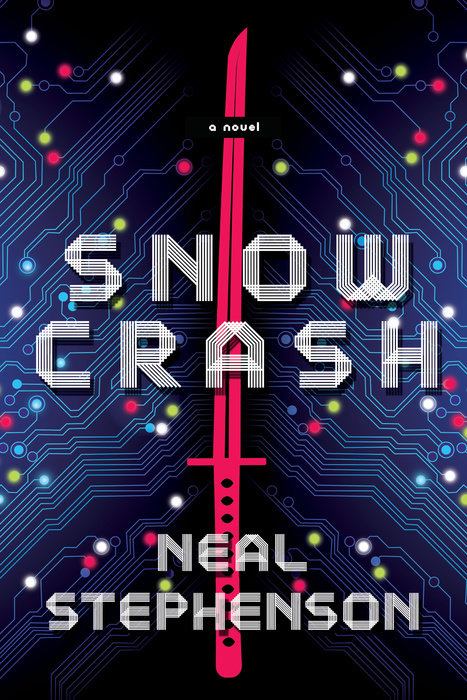
Read if Looking For: fun blends of futuristic and retro technology, observational humor, dramatic internal monologues
Avoid if: dated depictions of female and LGBTQ+ characters, weirdly sexualized 15 year old girls
Elevator Pitch:
Hiro Protagonist is a freelance hacker, and one of the original programers of the metaverse. YT is a 15 year old courier, who delivers sensitive parcels by harpooning cars and hitching a ride on her skateboard. The world is parceled into corporate burbclaves, each with its own rules, oftentimes able to be bent with a bit of cash. And amidst it all is a growing virus threatening those who visit the metaverse: Snow Crash.
What Worked for Me
This book worked best for me in individual slices. I found myself really enjoying specific moments or descriptions, and didn’t particularly care about the larger plot as much. Stephenson has a talent for using reality and warping it into something ridiculous, while keeping some of the core emotional resonance to the story. He’s a bit like a caricature artist. My favorite bits included
- A single afternoon of a ‘federal’ employee, which involved a delightful reflection on red tape and managers who will never ever give a wholly positive performance review
- A monologue of how the mafia cares more about pizza deliveries arriving within 30 minutes than pretty much anything else, and getting a late pizza is more or less akin to winning the lottery
- Hiro assuming his ex is hitting on him constantly, despite the narrative calling out how this is not at all a logical conclusion for him to draw based on past experiences with her.
- Ridiculously indulgent chase scenes that felt straight out of an action movie. No societal commentary here. Just fun.
Ultimately however, I think that these bits were stronger than the whole connected story. YT and Hiro were both really fun protagonists to follow, and I think the world was an interesting one. Despite being 35 years old, it felt familiar in the same way the the works of MacDonald or Tolkien do, because so many who came after took bits and pieces for their own writing. It feels weirdly relevant, a good sign of the quality of Stephenson’s insightfulness.
What Didn’t Work for Me
The small issue I had with Snow Crash was that the larger plot wasn’t terribly interesting, or stitched together in a well-paced or thought out way. You sort of have to accept floating from one plot point to another even when it doesn’t make much sense. I also couldn’t quite buy into the religious neurolinguistic programming storyline, which felt like an odd left turn for where the series headed.
My big problem, is that this book is a great example of how past books reflected a widespread acceptance of some fucked up stuff. YT (15 years old) is attracted to a fair number of adult men – alone not an issue, since it does happen – but a weird take that becomes even worse when she doesn’t see guys her own age as particularly attractive. It gets worse when the only sex scene involves YT and a man twice her age, and it’s fairly explicit. While this isn’t shown as some sort of fairy tale romance, it was a wild choice to make that (rightly) wouldn’t be included in a lot of modern writing, especially since the sex scene didn’t accomplish much thematically or plot wise of importance.
Similarly, the only queer characters are gay pirates who threaten to rape Hiro if he doesn’t consent to sex as a way of buying their way across a portion of the ocean. It was jarring, because it was written in the same sort of caricature-esque way of federal government bureaucracy. But if the kernel of ‘truth’ of one is the silliness of excessive red tape, the kernel of ‘truth’ in the pirate scene is some pretty unpleasant assumptions about gay men.
I think its easy to set aside something as ‘just of its time’ or to ruthlessly judge it in a modern lens without taking into account past context. I try to do neither, but these two elements make me very leery of reading Stephenson’s other work.
In Conclusion: A novel that has some excellent insights into society and capitalism displayed with a humorous lens, but which runs into serious issues depicting gay men and female kids.
- Characters – 3
- Worldbuilding – 4
- Craft – 3
- Themes – 3
- Enjoyment – 3
 Marked for Plot