
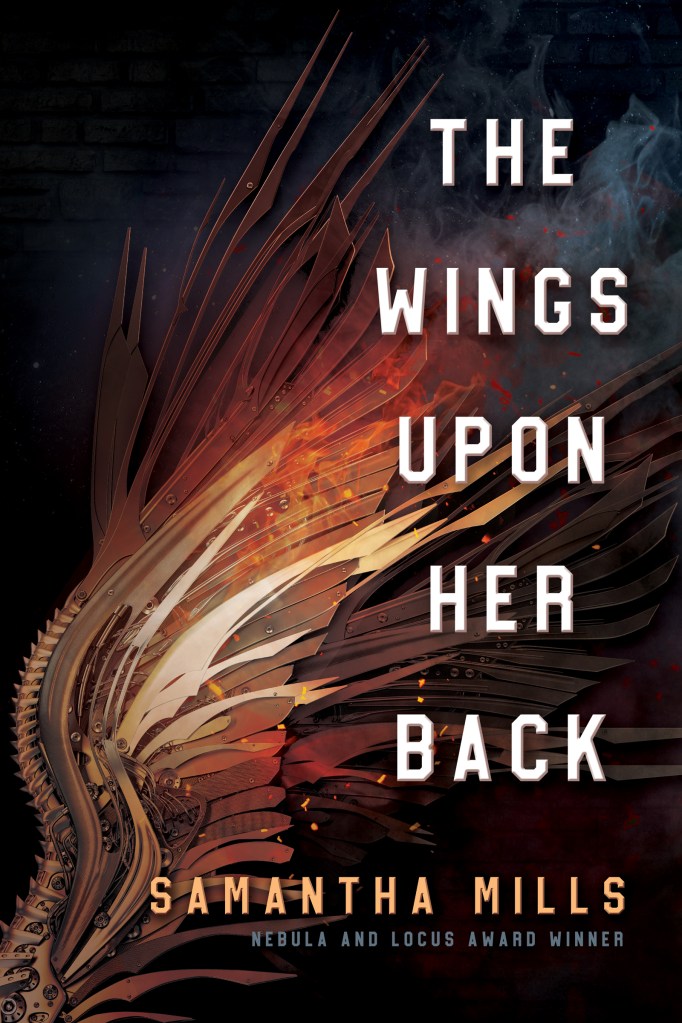
This book wasn’t really on my radar until a variety of people whose taste I trust recommended it as a fantastic thematic exploration of Fascism, Military Dehumanization, Religious Programming, and Abusive Relationships. I was hesitant about the mix of fantasy and mecha elements, but it ended up being a really enjoyable read that I anticipate being nominated for at least a few awards.
Read If Looking For: theme-focused novels, fantasy about religion and politics, nuanced relationships
Avoid if Looking For: action heavy books, fleshed out side characters
Elevator Pitch:
Zenya is an apprentice with the sect of the Mecha God, desperate to earn the approval of her mentor and prove that her roots in the Scholar sect won’t hold her back as a future warrior and enforcer. Decades later and now named Zemolai, she finds herself disgraced, wings ripped from her back and cast out for a single infraction. Zemolai grapples with her faith as she reflects on how she ended up participating in a system that, from the outside, doesn’t protect the city and citizens like it promises to.
What Worked for Me
One of my initial hesitations of this book was the pitch for the world. A city divided into five sections based on religion (a scholar god, worker god, farmer god, engineer god, and mecha god) taken over by the mecha warrior/protector faction, with soldiers flying on wings of metal. It seemed a bit too neat and tidy, but I actually think it really worked. The interludes, which were in-universe scholarly writings, had great musings about the identity of a city, religion, and the nature of gods. They helped provide depth and interest to the world, and the book shied away from being an action story that would have made it feel like a poorly done Divergent clone.
Instead, the book evokes a certain sense of weirdness, especially with a fairly early plot point being scholars positing that the gods aren’t actually gods at all, but rather something we would describe as Eldritch entities with unknowable purposes. It made Zemolai’s slow journey into the rebellion, and Zenya’s push towards becoming a warrior inservice of a radical master much more interesting. There’s still a level of tidiness to these divisions that I think detracts from the complexity and mesiness of a story trying to take itself so thematically seriously, but far less than I feared.
The parallel journeys of Zemolai between childhood and adulthood was also wildly successful. So often, authors struggle to find a balance between thematic resonance and shoehorning plot points to justify the two stories appearing side by side. In this book, the character development of both versions of our lead were interesting and nuanced, especially in how they pertained to her relationship with her abusive mentor. This relationship forms the core of the story, and it really worked well.
What Didn’t Work for Me
In her afterward, Mills shared that this book is about disillusionment. And while that theme is definitely there, peeking around the edges of Zemolai’s journey, I think this book ended up going in a very different direction. It’s primarily about looking at how authoritarian leaders can build fascist governments and how that’s a bad thing. It’s about abusive relationships. And while I think it primarily succeeds on those two fronts, I think the more interesting book would have been one that had a tighter focus on Zemolai’s inner turmoil as she grapples with deprogramming her brain from being a part of the fascist machine. I don’t want to claim these elements weren’t present, but it wasn’t prioritized much, and I really wish it had been, because I think that’s a much more interesting story to tell. For those interested in something that tackles this more directly, the memoir Banished: Surviving My Years in the Westboro Baptist Church is an engaging and thought provoking read.
Overall though, I found this a really successful novel. It isn’t my favorite read of the year, but its one that I see being more appealing to a wide audience and I’d be thrilled to see it on award slates next year.
In Conclusion: A book about one woman’s training to serve in a facist regime and her journey decades later to try and bring it crumbling down that succeeds in exploring authoritarian regimes with an interesting lead character.
- Characters – 5
- Worldbuilding – 3
- Craft – 4
- Themes – 3
- Enjoyment – 4
 Marked for Plot