
Sometimes there are books that have an enduring impact on me, where my first impressions of a linger and solidify. Other times my opinions about books shift radically the further I get from them. The Mars House is one of those books. It’s a book that had been on my radar, and I got a gentle nudge when I stumbled across it on my library’s shelves. It was a roller coaster of loving it, and slowly falling out of love with it the longer I’ve been away from it.
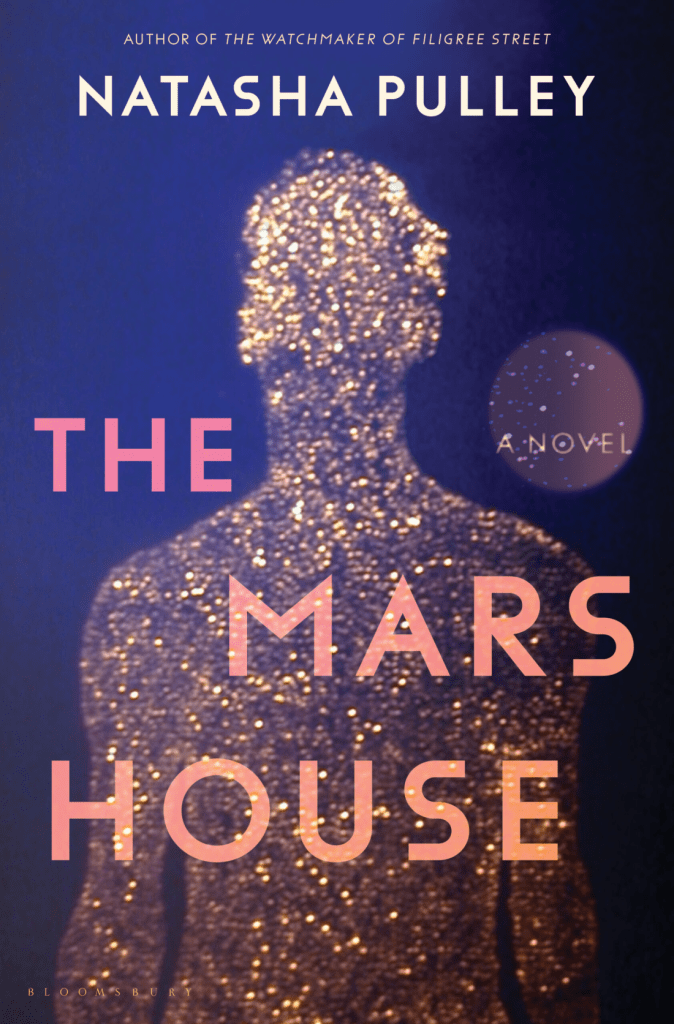
Read If Looking For: interesting moral questions, grounded science fiction, talking mamoths, neat and tidy endings
Avoid if Looking For: quality queer representation, healthy
Elevator Pitch:
Tharsis, once a martian colony and a now a full city in its own right, has separated significantly from earth. In seven generations, people have grown taller, more physically frail, and able to survive in frigid temperatures. They’ve also enacted a host of cultural changes to reform the issues the see from earth, including removing gender and religion. The leading cause of death is accidental homicide from the far stronger earthborn. A single accidental bump against natural-born Martians is enough to cause death or debilitating injury. January, a refugee from earth, finds himself a second class citizen, forced to work in a water factory despite being the principal dancer at the London Ballet. He finds himself linked to Aubery Gale, a senator running for Consul of Tharsis on the platform that earthborn are exceedingly dangerous, and should be forced to go through the dangerous and debilitating naturalization process to make Mars safer for those who braved the journey generations ago.
What Worked for Me
I really loved the political forces set up in this book. It does a great job of presenting a thorny political issue without easy answers. It’s clear the current system doesn’t work. Those born on Earth are compared to polar bears in-universe, and unaware of how much stronger than they are around them without constantly monitoring their movements. It’s a very real problem, and one that doesn’t map neatly onto issues of immigration in our world. But the laws proposed by Gale remove bodily autonomy from earthborn and put them through a medically heinous process. It’s a setup without easy answers, and the book initially refuses to simplify this conundrum. The best parts of the book were seeing how Aubrey and January’s views shifted as they began to understand the underlying causes of each other’s points of view. It perhaps isn’t the most realistic portrait of political change, but it felt remarkably relevant to the US discourse.
I also really enjoyed the worldbuilding of this book. I accepted the science parts at face value, because it allowed for a really interesting set of dynamics. Add onto that how earth has developed – Russia, China, and Africa as the centers of power with the US seen as religious fanatics who are burning themselves alive – and it just felt like a really fresh version of how Earth is going to fall to pieces under climate change.
Tharsis as a city was engaging too. I’ve seen a lot of criticism of this book on the grounds that Tharsis is a horrible place. They force people to wear cages! Encourage debilitating and nonessential surgery! Their views on gender are regressive! They’re super xenophobic! I find most of these criticisms misguided, as I don’t think the author or the book endorses the idea that Tharsis is a utopia. The martians certainly think it is, but I loved how this book presented a society that claimed to have grown away from the barbarity of Earth and created something beautiful, when in reality it was fucked up and broken as the world they left behind, just in fundamentally different ways.
What Didn’t Work for Me
I said earlier that I really liked the setup and building of political tension around a (seemingly) realistic way this might play out. Unfortunately, I think the string of dominoes never really got knocked down properly. The story relies on a few key plot twists that felt expected, and relied on several characters making a series of illogical choices. It pushed beyond the realm of my suspension of disbelief, and the book suffered for it. The ending also took this beautiful and complicated moral and political issue, seemingly without easy answers and resolved it in the worst way possible. It took the most interesting parts of the book, which was a refreshing and audacious attempt to engage seriously with an ethical dilemma and took all the teeth out of it. The first half of the book was a 5/5, but I’d put the second half around 3/5, which was unfortunate. The further I’ve gotten from this book, the more the ending frustrated me, as I despise authors starting something ambitious only to chicken out when the story asks them to actually commit to the idea.
I also cannot endorse this book as a good form of queer representation. The nonbinary (or perhaps agender) nature of folks on mars in this book is a culture-wide choice. People are born without genetic markers for one gender or another, and most people are grown in vats. The culture sees using gender as animalistic, and it was a conscious choice made generations ago to try and avoid gender-based violence of earth. While this is an interesting worldbuilding choice, and one explored quite thoroughly in satisfying ways, I wouldn’t necessarily consider this an example of queer representation when recommending books. The book involves characters that are perhaps queer in theory, the book doesn’t engage with queerness in meaningful ways, and I think there are far better examples of nonbinary representation out there in the fantasy space.
In Conclusion: A really interesting portrait of a martian colony with some compelling political conundrums, but one that ultimately fails to stick the landing or provide interesting insight into queer identities.
- Characters – 3
- Worldbuilding – 4
- Craft – 3
- Themes – 2
- Enjoyment – 3
 Marked for Plot