
The Tainted Cup was one of my more anticipated reads of the year. I loved Bennett’s Divine Cities, but found Foundryside to be aggressively mediocre despite hitting nearly every trope I enjoyed at the time. I am very appreciative that The Tainted Cup has more in common with the former than the latter.
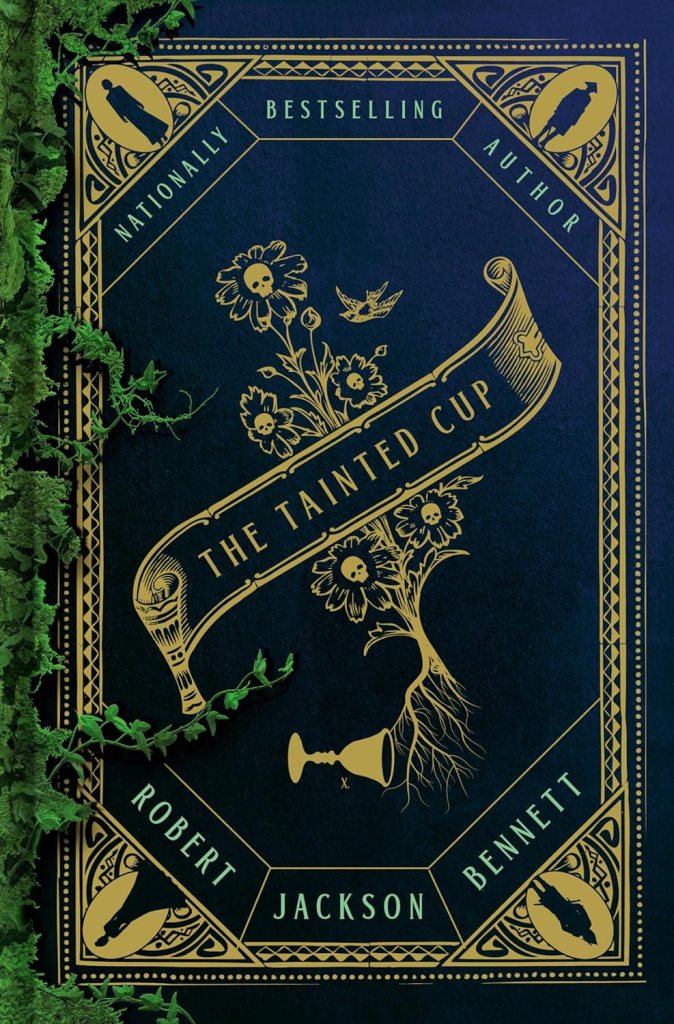
Read If Looking For: a classic murder mystery book in an epic fantasy world
Avoid if Looking For: you don’t enjoy Sherlock Holmes
Elevator Pitch:
This book is pretty directly inspired by classic mysteries. Armchair Detectives are the clear reference (Nero Wolfe in particular), but Sherlock Holmes is another inspiration point. The story is told through the eyes of an assistant with perfect memory recall who serves an Imperial investigator who generally refuses to leave her house, gets wildly overstimulated to the point where she oftentimes tries to shut out sensory input, and is interested in only the most unique cases. Set in a world where leviathan bodies are used to create grafts to enhance life (human, crops, etc), many people are superhuman, but it always comes at a cost. Anyways, the story starts with a murder caused by someone forcing a tree to grow explosively through a man visiting a Gentry estate, and the Din (the assistant and our lead character) is sent to gather evidence for the investigation.
What Worked for Me
Overall I thought this book held together really well. It didn’t have the thematic ambition of Divine Cities, but I think it’s Bennett’s strongest book to date in terms of prose, structure, and pacing. He mentions in the afterwards that mysteries require a lot of detailed work to make sure that everything lines up, and it’s clear he put the time in to make this story sing. The book does expand beyond the single murder pretty quickly, but keeps the procedural nature of the book at its core. While I’m not a huge mystery afficianado, I’ve read enough classic mysteries to appreciate how he pays homage to the core conceits of the genre despite such a radical change of setting. I definitely saw some of the reveals coming, but most were pleasantly baffling to me, and my own theories mostly proved pretty far off the mark, despite the evidence being present for me to analyze the whole time.
I also really loved the setting. The basic premise is that leviathans from the sea attack every year, possibly trying to get to a lake in the interior of the continent. The Empire mans massive sea walls, trying to kill them before they can make it through, using the Leviathan blood and flesh to further their research into alchemical modifications. There’s been a lovely undercurrent of the dangers of ecological manipulation in how the world has been developed, and there’s definitely room in the sequels for this to become a more central part of the story if Bennett wants.
Finally, this book has continued to see some incremental gains in Achillien representation in major fantasy outside the Romantasy sphere. And while it falls in the same bucket as Tide Child where it’s almost so passing in nature to not even be worth mentioning, I appreciated it. Sapphic stories with really ambitious plots have been having a much deserved golden era right now, and I’m hoping that queer male characters will continue to make inroads.
What Didn’t Work for Me
I think there was a little bit of clunkiness in a few minor places. Din’s old boss/teacher seemed unusually wrathful towards him, which felt out of place compared to how other characters were portrayed. Din ends up with some unique-ish powers that felt out of place at first, but ended up being settled to my satisfaction by the book’s end. No problem I had went beyond something exceedingly minor, and I really enjoyed my time with this one. It isn’t my book of the year, but it’s definitely on the short list (and certainly the book I like most from those who have a realistic shot at being a Hugo winner).
In Conclusion: A classically inspired murder mystery set in a fantasy world defined by alchemical grafts. Tightly written, and a really great read.
- Characters – 3
- Worldbuilding – 5
- Craft – 5
- Themes – 4
- Enjoyment – 5
 Marked for Plot
2 thoughts on “The Tainted Cup”