
I came to the Bone Ships as part of r/Fantasy’s bingo project, looking for an interesting book for the ‘Weird Ecology’ square in 2023. This book came with a lot of accolades and, while I didn’t find all of it to my taste, it was good enough for me to read the sequels, which quickly cemented the series as some of my all time favorites.
Read If Looking For: dark and gritty stories, secondary worlds that don’t evoke real world cultures, books on ships
Avoid if Looking For: an upbeat read where everything goes well for the main character
Elevator Pitch:
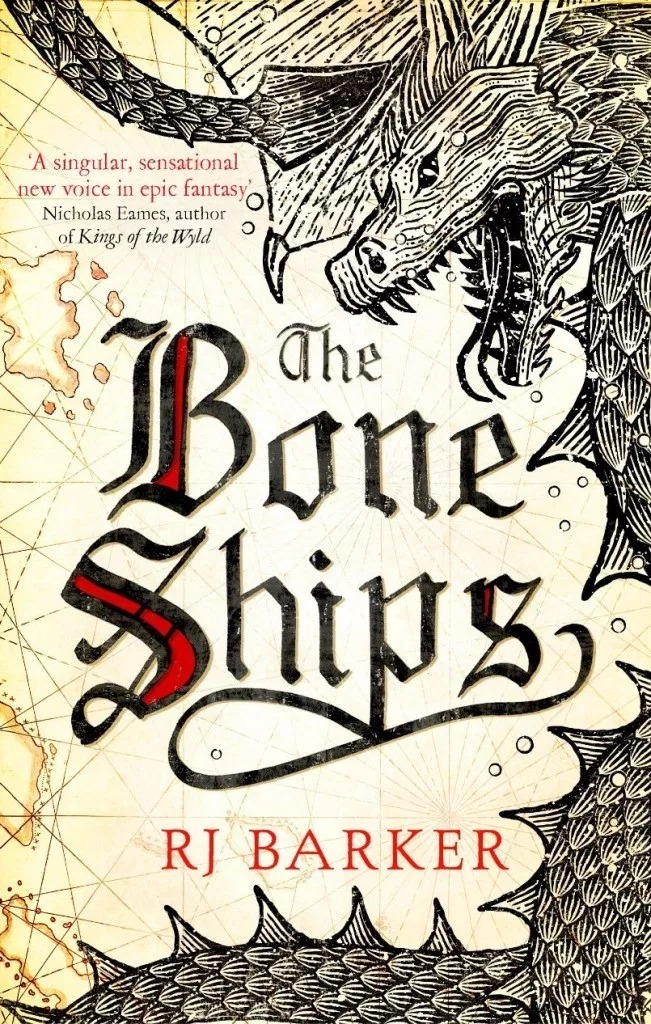
Joron used to be the captain of a prison ship. A bad captain to be sure, but a captain nevertheless. That changes when Lucky Meas, a legend of the navy, takes his position without a word about why she’s on a prison ship in the first place. She starts whipping the crew into shape for a mission of epic proportions, with Joron trailing resentfully behind. Things are about to change, as the first dragon for many years has been spotted, and its bones will surely promise a naval advantage to whichever country can kill it.
What Worked for Me
The setting is the star of the show in this book. It’s a world without trees – but full of vines. Mammals other than humans are fairly nonexistent, but keep an eye out for the large variety of brutal avian creatures and eldritch monsters of the deeps. Dragon bone is the most valuable resource in the world, as it’s the only thing that can really create boats in a world without large continents.
From a cultural standpoint, things are fascinating as well. Healthy babies are a rarity, and women who show the ability to bear them quickly rise into the ranks of the government, their status growing as they bear more healthy children. Noble men, meanwhile, dress to show off fertility in a delightful inversion of traditional fantasy tropes. Bulging crotches and strappy tops that show off pectorals are common as a way to show the women their virility. Ship culture follows completely different rules, and there’s a good deal of animosity between the two camps. In fact, heterosexual relationships are banned on pain of death, for bearing children on ships is the worst of taboos. It was a fascinating world to explore.
From a plot standpoint, the book does a great job of having a truly epic scope and managing to make a travelogue style story interesting. There are a few plot holes that I needed to wave away, but the story is gripping, and the shifting crew dynamics as they shift from a pushover captain to one used to military discipline was executed to perfection. You really feel the claustrophobic nature of ships, and the crew is as much of a character as Joron and Meas are.
What Didn’t Work for Me
I have two principal complaints from this book. The first, is that I doubt the premise that in a world where dragon bone and ships are so valuable, a ship made of it would never be used as a prison vessel, even one in theory serving the navy in a support role. Yes it is rotting, but surely there were better uses for it.
Secondly, is that Joron himself is extraordinarily passive in this book. He spends most of it being broody and upset as his situation, plotting revenge but never acting on it. Meas is the driver of the plot, and Joron reacts to her commands and whims. It was a rather significant drawback in my enjoyment of an otherwise stellar debut.
In Conclusion: A dark nautical fantasy in a weird world that is perfect for people looking for gritty stories on ships.
- Characters – 3
- Worldbuilding – 5
- Craft – 4
- Themes – 4
- Enjoyment – 4
A note about the queer rep: Joron is gay, but it’s never quite clear if this is because of personal identity or simply how people couple on ships from a cultural standpoint. It’s also such a minor plot point you forget about it, so it doesn’t feel particularly queer.
 Marked for Plot