
The prairies of the American Midwest and West have always been special to me. I grew up in a rural farming community in Kansas, a place where thunderstorms and tornadoes were both pedestrian and awe-inspiring. Much of the land I grew up on gets a bad reputation for being flat, but nothing makes you feel smaller than sitting in a vast ocean of corn staring up at the night sky. Living further north (and in a major city), I miss the stars, the silence, and the swaths of empty space from the prairie.
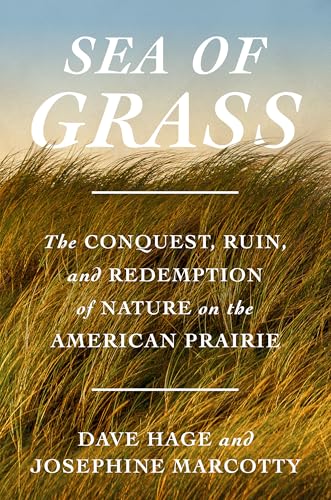
Sea of Grass: The Conquest, Ruin, and Redemption of Nature on the American Prairie is a deep exploration. It begins by tracing the history of the prairie at a large scale: from its importance to indigenous communities to the current cash crop craze of corn and soybeans. Following that, it devotes time to specific topics: insects, soil, nitrogen, bison, etc. It shifts between testimonials, scientific research, and case studies as it makes its case for the ecological and societal importance of the great American prairies.
Largely, it succeeds.
I learned a lot from this book. It put much of my personal history in context, called into account my personal connections to the ecological collapse of this landscape, and shed light on how important the ecosystem is to preventing climate change. It also directly connects to work I do at school. In my 6th grade curriculum, we spend a month working on nonfiction reading & informational writing skills focused on nitrogen pollution from Minnesota farms and their impact downstream, including the ‘Dead Zone’ in the Gulf of Mexico.
The book is largely hopeful in tone. It’s presenting an optimistic front, but I couldn’t help but doubt the underlying assumption that American society will make the changes it outlines as necessary. Early in the book Hage and Marcotty explore the idea that humanity, like all other species on Earth, faces a population cap directly reliant on its ability to feed itself. The drive for more intense food production has led to ecological destruction of a precious resource. I wish they would have returned to this when highlighting solutions. Many of the sustainable farmers and ranchers featured in this book are doing the hard work. However, feeding 8 Billion people (and counting) simply isn’t sustainable, and the book kept dodging this idea. I mean this not as a critique or a statement we shouldn’t push for ecological restoration and sustainable food production. Rather, I wish it were acknowledged more fully; near-term harm ensures the long-term future of our species.
Sea of Grass was an engaging nonfiction book, though I don’t read enough to have a good sense of comparison to other books in this style. Would I have found it as engaging without the large amount of personal connections to the content? Not sure.
 Marked for Plot