
An Inheritance of Magic has been buzzing around my circles as one of the better Urban Fantasy series to come out in the past few years. This isn’t a subgenre I spend a ton of time with, but I’ve found that widely loved series tend to be reliably enjoyable for me (other than Dresden Files), and An Inheritance of Magic certainly lived up to that premise. It’s not perfect, clearly wants to prepare you for a long series, and seems to be a solid and readable ‘zero to hero’ story.
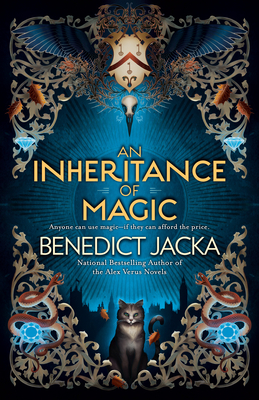
Read if: you enjoy reading about plucky underdogs making it work, are in favor of Orca whales crashing billionaire Yachts off the coast of Spain, are looking for something tropey and simple
Avoid if: comedically evil villains put you off, you dislike explanations of magic, religious logic problems put you off
Comparable Media: Tarot Sequence, Arcane Ascension, Witch Hat Atelier
Elevator Pitch:
Stephen is an aspiring mage who wants nothing more than to make enough to pay rent and to start hunting down his father who vanished mysteriously a few years ago. When a strange woman claiming to be a distant relative of the mom who walked out on Stephen when he was a baby, his life is set to change. The assholes of that family see him as nothing more than a pawn, and the cost of growing in magic is exorbitant. Still, it gives Stephen the clues he needs to finally start making progress in his own craft and the connections needed to begin looking for his father. Before any of that though, he needs to make sure that the capitalist chokehold the rich have on magic doesn’t crush his dreams before they can even begin.
What Worked for Me:
Jacka did a great job of blending Urban and Progression Fantasy with this series. It’s got the smooth writing of some of the best Urban Fantasy out there. He leans on tropes in his writing, showcasing where the plot is headed and pressing all the right buttons to get you excited about Stephen eventually getting his revenge on all who wronged him. Is it wish fulfillment? Yes, absolutely, but it’s (mostly) well done. The magic in this series isn’t anything as chunky as what Sanderson writes, but Jacka gives you enough details about how it works to feel invested in Stephen’s progress as a mage.
This book is clearly meant to set up for a longer series. As such, its more conventional plot arc isn’t the most engaging. Stephen meanders a bit through the story, buffeted from event to event without any sense of rising tension or connective tissue. Instead, the story introduces a wide cast of characters who remain mysterious and distant – no doubt to be explored more deeply in sequels – establish various powerful factions and world events happening in the background of Stephen’s journey, and lay a foundation of how the magic works for Stephen’s eventual ascent. It succeeded on every count at making me intrigued and excited to see where the story goes, especially since the narrator was competent. This is the perfect type of story I like to listen to, where it doesn’t require my entire brain while it enjoys eating popcorn and watching cool shit happen. Who doesn’t like a superpowered cat?
What Didn’t Work for Me:
Let’s get something out of the way quickly: Jacka uses a throwaway line while talking about how ‘pretty’ Stephen is (he doesn’t like this of course) that he got sexually harassed when he took a job at a bar without realizing it was a gay bar. This is the only onscreen reference to the Queer community, and it bugs me quite a bit. I’m not going to sit here and claim there aren’t gay men who sexually harass people. However, when that’s your only reference point for the queer community in a book, it reinforces the stereotype that gay men are sexual predators, especially since the target audience for this series is heterosexual men. How hard would it have been to make one of Stephen’s friends (most of whom get little more than two pages of screen time) a gay guy? Some sort of balance, please.
I also think the character-work in this novel wasn’t quite up to the level I’d like to see it at. I understand that Jacka was spreading a wide net, trying to introduce a lot that (hopefully) will get fleshed out in sequels. As it stands however, the vast majority of characters are very one dimensional. There’s a spoiled brat who is overwhelmingly cruel in the most campy way possible. There’s a mysterious priest who offers sage advice only after solving religious logic puzzles (I hope these don’t continue. It felt a little too preachy. You could’ve worked in the Problem of Pain much more naturally into the story without this). There’s a wary young woman in the same profession as Stephen who has a tentative truce with him. However, nobody gets much depth beyond an initial cardboard cutout. Even Stephen is … well kind of bland? He’s got morals and loves his cat and wants to find his dad. He’s super hard working, sometimes is kind of rash. He’s like pretty much any other progression fantasy protagonist I’ve seen, and his narrative voice isn’t anything unique. Again, I’m hoping this shifts as the books continue. If the series is a bunch of cool moments without anything deeper happening, I could see myself reading 2-3 of them. If that doesn’t begin to shift, I probably won’t continue past that though.
Conclusion: an urban progression fantasy that is more concerned with setting the stage for a long series than deep characters or a thrilling plotline.
- Characters: 2
- Setting: 3
- Craft: 4
- Themes: 2
- Enjoyment: 4
 Marked for Plot