
The Justice of Kings has been sitting on my shelf for a full year. Somehow, I found time to read it right as its hype has begun to fade into the constant churn of new titles being put out. Oftentimes I find myself at odds with popular consensus on titles, but I think this book’s reputation is about as accurate as you can get. I think some people will be frustrated that our protagonist character is mostly tagging along for this book, but it’s a really solid entry for people looking for books that tackle similar ideas as Game of Thrones, but without the sprawl of multiple points of view. Plus, this series actually got finished.
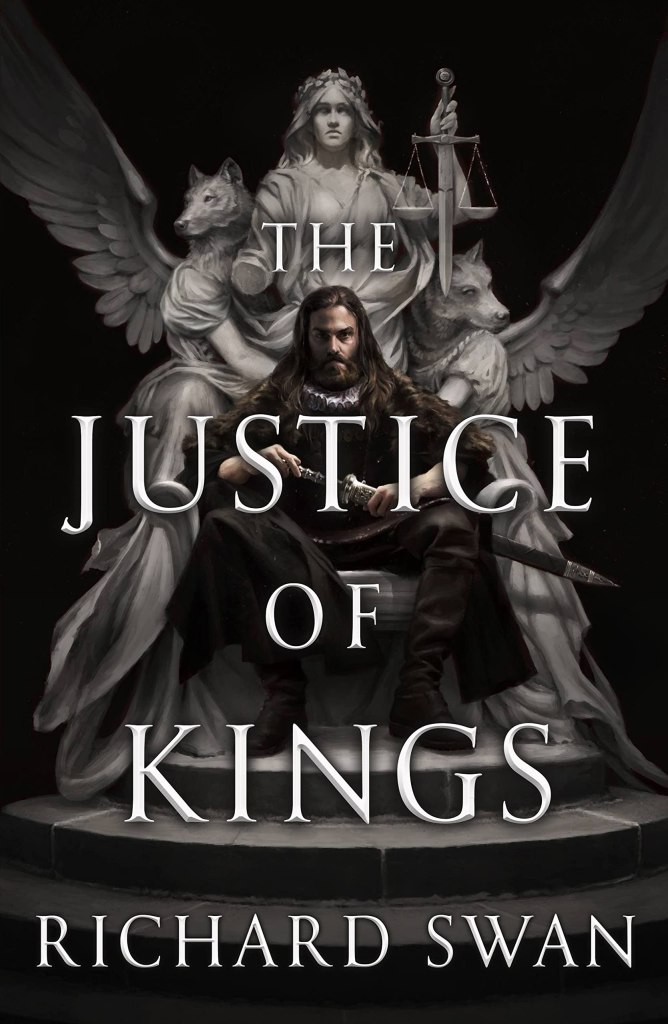
Read if You Like: political intrigue, realistic fantasy, low magic settings, religious zealots
Avoid if You Dislike: extended courtroom scenes, proactive protagonists, traditional mystery plotlines
Elevator Pitch:
Helena is a clerk for Justice Vonvalt, who travels the empire ensuring the law is followed across the land. He has the power of investigator, justice, and executioner at once, and he holds arcane powers bestowed only on those as an Emperor’s Justice. This story follows their investigations of heresy in a small town and (more prominently as the story continues) the murder of a merchant’s wife in a river city. Helena tells the story from years later, candidly talking about how these were the first dominos that began the long chain of events bringing the Empire crashing down upon itself.
What Worked for Me:
It took me a bit to get into this book, but once I was committed, I greatly enjoyed what The Justice of Kings had to offer. It takes a Game of Thrones approach to Fantasy, keeping largely grounded in reality and free from too many classic high fantasy tropes. This book isn’t a murder mystery despite an investigation being central to the plot. It’s definitely political, though the main characters are largely uncovering political machinations instead of participating in them. It doesn’t center dramatic fight scenes, grand revelations, or twists that will make you keep turning the next page. Instead, it follows a single-minded man on a quest to ensure the law is followed despite knowing – because Helena tells us so – that the very walls of justice are crumbling around him. The book stakes a claim that you’re witnessing the start to the fall of an empire, and it fits that promise admirably, without feeling overwritten in the process of getting there.
I think this concept largely worked so well for me because most books tracing the fall of an empire get preachy about the fact. I don’t mind that, especially when the book has interesting things to say about power. However, The Justice of Kings allows you to simply be a passenger in the story, much as Helena herself remains a passenger for much of the book. I was a bit overwhelmed at first with the amount of regions, historical events, and factions thrown around. By the end of the book however, I found myself engrossed in the power struggle between religious, secular, and aristocratic factions. It seems like Book 2 will feature more traditional political machinations, and I’m very excited for it. Overall, I liked the way the book handled its content, and the story felt consistently grounded and realistic.
What Didn’t Work for Me:
This book lives in a bit of an odd space structurally. It technically is a tale told by Helena many decades after the events take place; she occasionally references the future of the empire, how she feels about how she acted all those years ago, etc. However, these interjections are few enough that the majority of the story doesn’t feel like a framing narrative is being used at all. The descriptions are too crisp, the telling too linear, and it lacks any of the characterizations of oral tales or written journals. The retrospective commentary feels jarring rather than part of an integrated story. I think Helena herself is a bit of a self-insert character. At its core, the majority of this book feels like it is the words of an author, rather than the words a character relays as she reflects on her life. Had Swan managed to grasp a distinct voice for her as a storyteller, I think I’d have appreciated this format more.
I also largely feel like the first 100 or so pages could have been condensed or omitted. Swan is brutal in the length of his descriptions of locations and scenes, and our opening foray into a hamlet plagued by a sense of unimportance. I can appreciate this introduction as a way to introduce us to characters, their abilities, and their roles before the main plot kicked off. I’m glad I didn’t stop reading the book, but I stood perilously close to setting it down in confusion as to how popular it was. I think excessive sensory description works for many, but Swan’s prose simply isn’t able to bear the burden of carrying the story without significant plot or character work happening in this opening section.
Conclusion: the book took time to hit its stride, but captured a gritty portrait of an Empire in crisis through the eyes of a clerk to a travelling Justice
- Characters: 2
- Setting: 5
- Craft: 3
- Themes: 3
- Enjoyment:4
 Marked for Plot