
We so rarely get to see older protagonists in fantasy and science fiction. Those we do get to see tend to be retired adventurers, war generals, or all-powerful magicians. Not old ladies who are struggling with bladder control and nosy children. Shadow Life was a breath of fresh air. It’s a moody and atmospheric graphic novel, and a slice of life very much outside the norm for genre fiction. As a novel, I think it would be unremarkable but enjoyable. In comic format however, I found it rather entrancing.
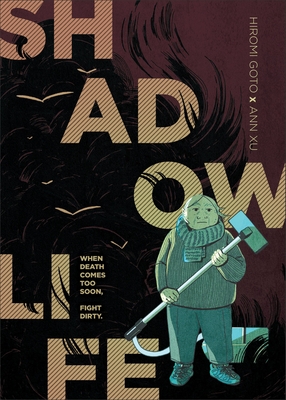
Read if Looking For: dark cozy, bisexual old ladies, shadow cats, characters with selective hearing, slice of life stories
Avoid if Looking For: plot-focused books, strong horror or fantasy elements, clear thematic takeaways
Elevator Pitch
After sensing evil spirits in the retirement home her children arranged for her, Kumiko has struck out on her own. She’s got her own apartment, a friendly neighbor, and a nagging sense that something is following her. As Death’s Shadow haunts her every step, Kumiko seeks independence in a world that wants to control her. Her journey even brings her back into contact with an old lover, a new vacuum salesperson, and away from her daughter’s nagging phone calls.
What Worked For Me:
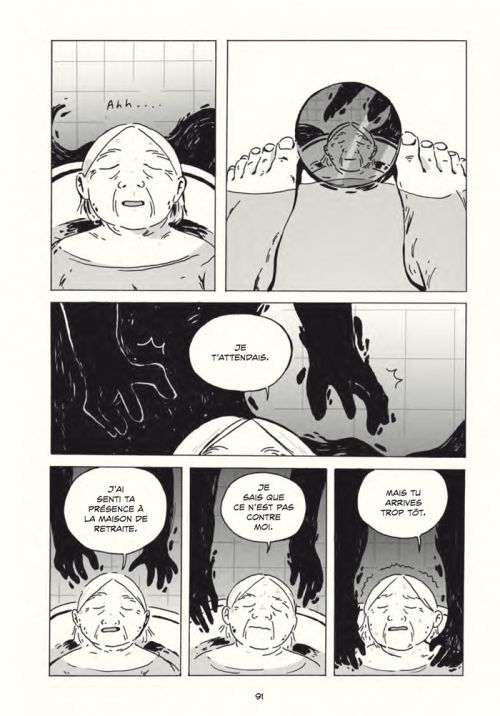
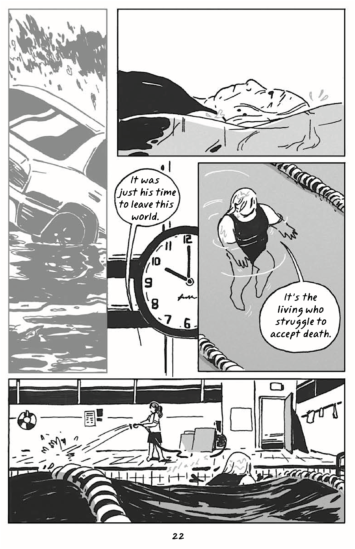
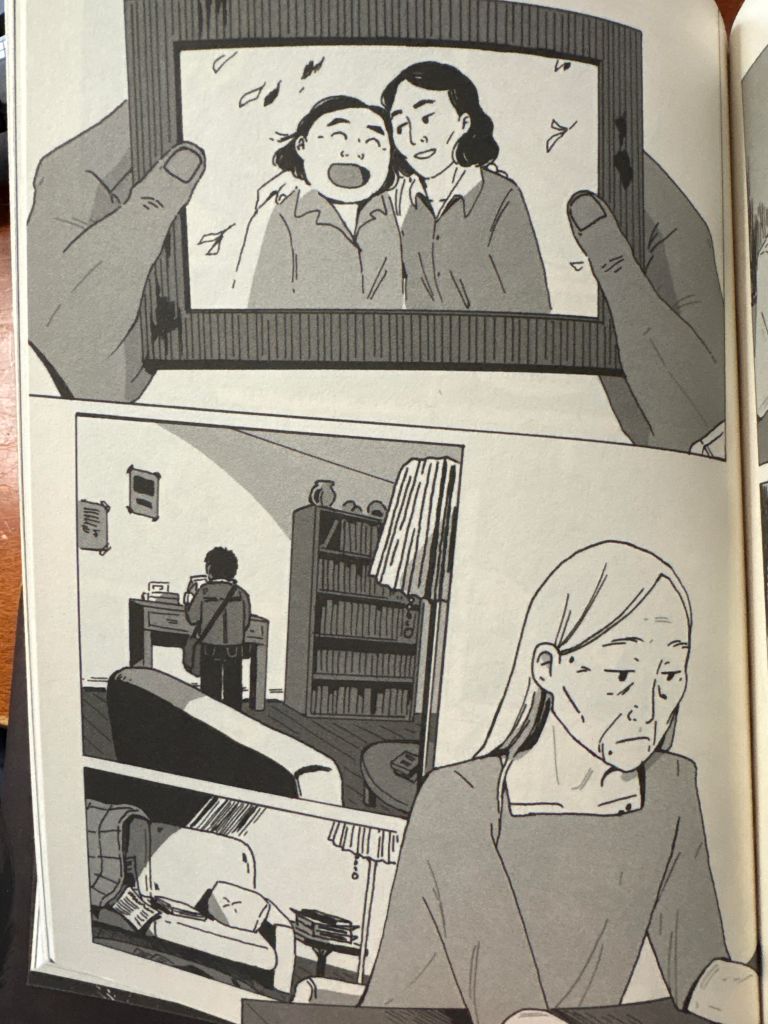
More than anything, I think Goto and Xu did a phenomenal job of blending story and art to create a cohesive mood. You get plenty of aspect to aspect transitions between panels (think establishing shots in a movie, or montages exploring a single location) to ground the story in the mundane. This is not a Ghostbusters adventure. Instead, they clearly signal that readers should care more about the daily life of an elderly woman who is simply trying to live a happy life. The art is mostly understated and calm, placed in direct contrast with the amorphous smear of Death’s Shadow who follows Kumiko’s every step. I was expecting more of a horror comic, but Goto leans more into melancholy and reflection than anything else, and Kumiko’s daily experiences and personality are the focus.
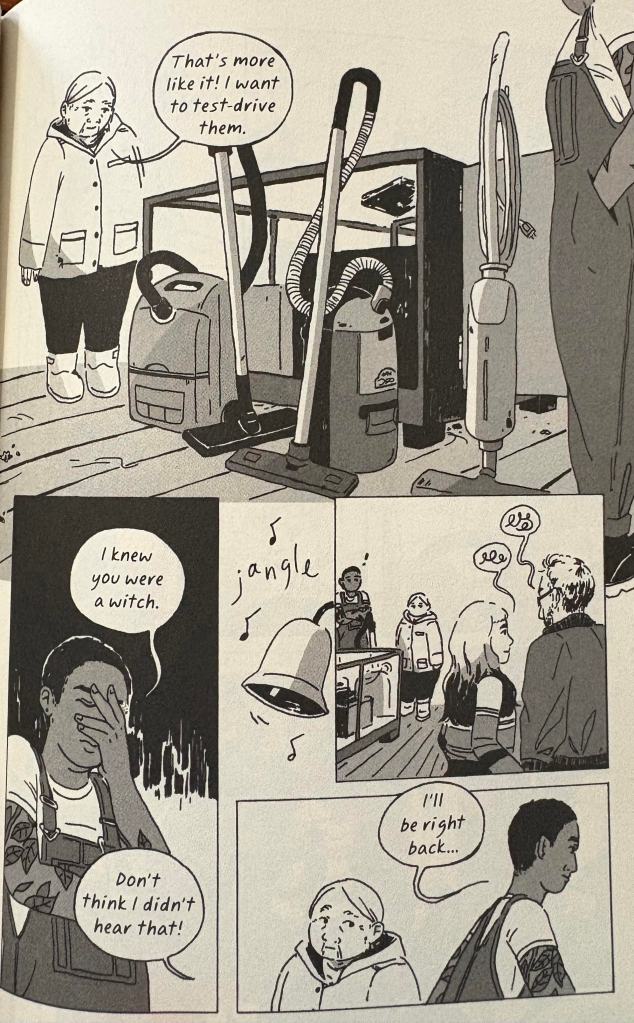
And what a personality it is! This type of low-key slice of life story only works when you have an engaging protagonist, and Kumiko is delightful. Vaguely grumpy elder isn’t exactly a new trope, but Goto avoids most of the common pitfalls similar stories have taken (I’m thinking of A Man Called Ove, which leans into the stereotype). Kumiko is stubborn yes; she avoids calling her children to avoid their nagging and worrying, will do anything to avoid waste, and isn’t interested in changing her habits. However, her motivations and desires for independence keep her more humorous antics (such as haggling for a used vacuum cleaner) from spiraling into something trite or campy. She’s a well rounded character, and not one we get to see much on the page. As it is, her humor, bite, and determination kept me engaged in the story.
Finally, I thought Kumiko’s romantic relationships were handled well. She’s single with a dead husband whom she loved deeply, and this book definitely isn’t a romance. However, Kumiko does reconnect with her first love in the story, and it was refreshing to see their interactions. Gentle disagreements and sniping, rebuilding bonds as both sense their lives coming to a close, and not holding back because of it. We see so many examples of queer love, but so few queer relationships that exist without falling in love being the focus, and there’s absolutely nothing I would change about how Goto handled these scenes.
What Didn’t Work For Me
I think this book would have been strengthened a bit if it either leaned more into weird existential visual metaphors, or if the story were a bit more internally consistent. There was a good amount of supernatural elements that never got addressed and a climactic sequence that raised more questions than it answered, yet the art never quite committed to the surrealism of the plot. Had the two been more aligned (in either the abstract or straightforward direction), I think that would have pushed this book from a great book, to a favorite graphic novel. I think this is often where I fall with Slice of Life books. I enjoy them a lot, but they tend to not push hard enough to land in my favorites. That said, Slice of Life is a style of storytelling that’s specifically meant to let characters and situations exist for the benefit of themselves, instead of for some greater meaning.
Conclusion: looking for elderly queer characters who don’t give a fuck what you think? This is the book for you
- Characters: 5
- Setting: 4
- Craft: 4
- Themes: 3
- Enjoyment: 4
 Marked for Plot
One thought on “Shadow Life”