
My exploration of graphic novels and comics continues. Here’s a bundle of graphic novels I read in December. You’ll find a decent amount of horror, Red Scare America with anthropomorphic animals, cozy mermaids, and some vintage high fantasy elves. These are sort of loosely organized with my favorites at the top, but ultimately none of them felt like they warranted a longform review on their own.
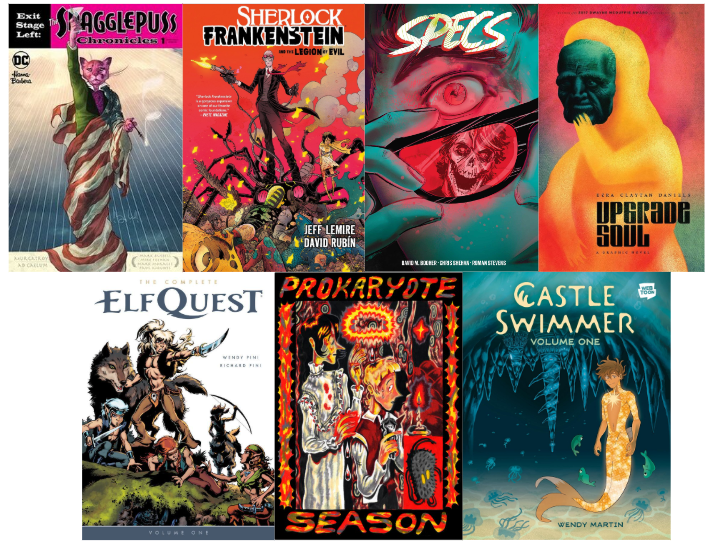
Snaglepuss Chronicles by Mark Russell
Read if Looking For: reflections on American history, queer life in the 50s, witty banter that’s actually witty, endings both tragic and sweet
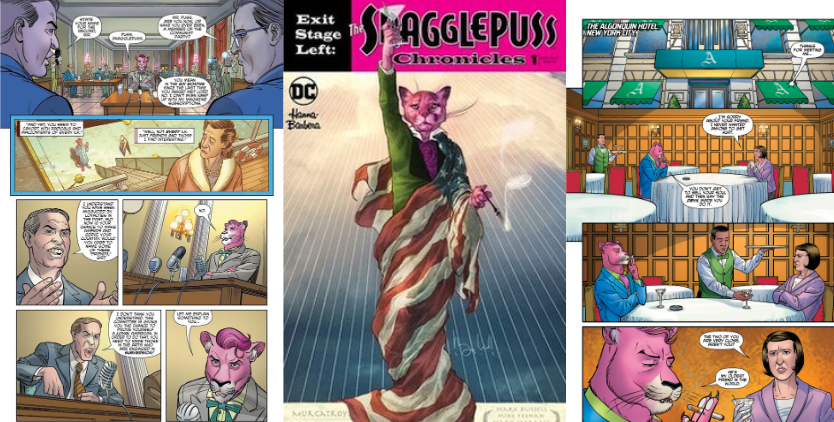
Snagglepuss is a comic that could have been historical fiction had half the characters not been anthropomorphic animals. Snaglepuss Chronicles shines a light on gay (and slightly on lesbian) identities in the McCarthyism era. SP is our titular pink feline, a playwright living a double life who takes joy in his role producing thoughtful art and pushing America to be better. But really, this story focuses on the cost being queer took on folks in the 50s, and the differing ways characters coped with those stressors. It’s interested in the role of art in culture, and frank discussions of American history.
This short comic series feels very grounded in reality, doesn’t shy away from historically accurate gay stories (content warning for suicide in particular), and felt generally insightful. Lots of quotes from this one have been sticking with me, and the book highlights the importance of resistance against injustice even when you know it won’t end well for you. I see a lot of potential in this book as a cross-disciplinary teaching tool for students who are also studying American History. The chances I ever use it as a whole-class read is low, but I’m intrigued by the possibility and want to explore it a bit more.
Sherlock Frankenstein and the Legion of Evil by Jeff Lemire
Read if Looking For: fun supervillains who mostly aren’t actually that evil, a quest for a missing parent, light mystery elements, conversations over fight scenes
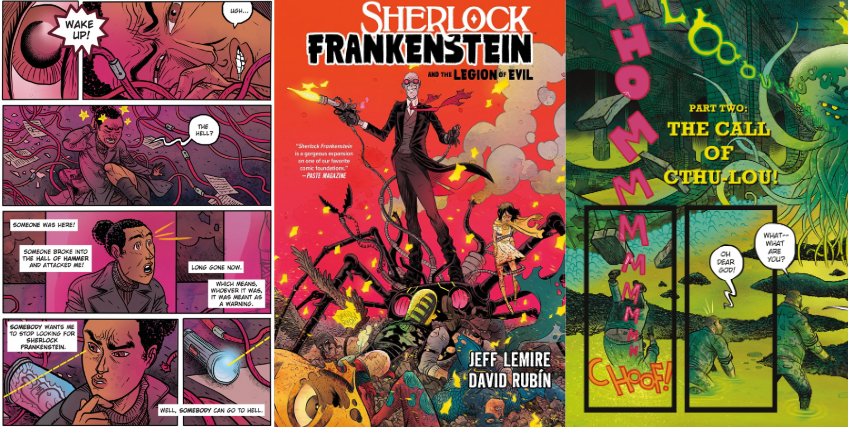
Lemire created a setting that will feel familiar to anyone familiar with Marvel or DC superheroes, but never so close that it feels like a carbon copy. This story follows Lucy, the child of the Superhero Black Hammer. Her father died fighting an Anti-God, along with many other supers of his era. She’s convinced he’s still out there however, and the only lead this (now fully grown) journalist can think of is that her father’s enemies might have information that will help her find him.
This was a pretty low-key superhero story, more fun than thrilling. Each chapter more or less involved her hunting down a different supervillain and getting some clues from them before moving on to the next. They’re either not that evil (such as the plumber turned eldritch minion Cthu-Lou) or retired (Metal Minotaur). They mostly all end up being amicable with Lucy, so don’t come expecting an action story. Instead the superhero setting exists for something cozy and a bit absurd. There was enough here for me to want to read more, especially since this story didn’t really answer any of the big questions it set out to answer (Lucy does not find her dad by the end of the book).
Specs by David M. Booher
Read if Looking For: Season 1 Stranger Things vibes, unrequited gay love, accurate (racist) depictions of small towns, the unexplained
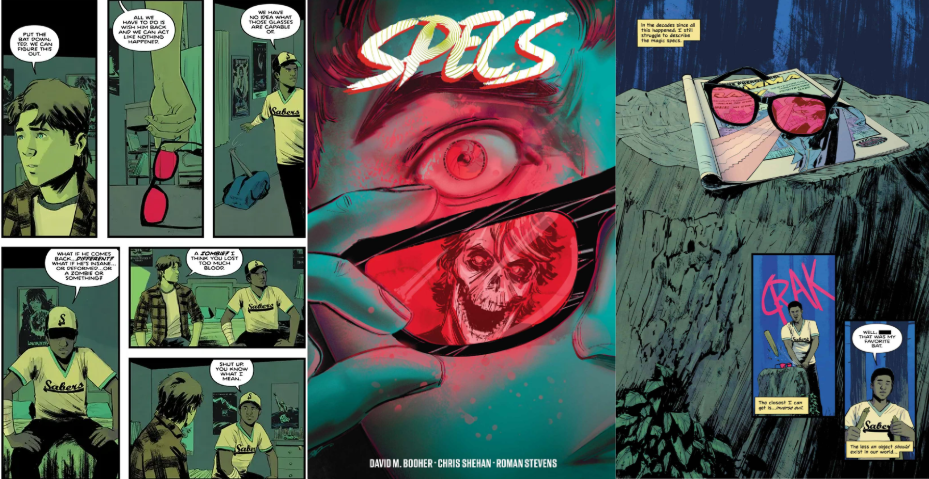
Specs is a fairly constrained horror story about a pair of boys who end up with a pair of magic glasses that grants wishes. As someone who grew up in a small midwest town and had several unrequited crushes on heterosexual friends over the years, this story resonated with me a lot. It isn’t the most ambitious comic you’ll find in the world, nor the scariest. It channels a bit of the classic ‘be careful what you wish for’ vibe common in these types of stories, but cares more about the relationship between the two leads. I think the strongest part of the story was the main character’s blindness to the struggles his best friend went through as a black kid in a small town. This story is short, melancholy, and bittersweet. The ending is kind of unhinged (not in a great way) but I don’t think it ‘ruined’ the story for me. Just a weird choice that didn’t pay off. Your mileage may vary at 10 bucks (or a library rental) but the read-time is short enough that I was happy to sit with it, even if it isn’t going to sit with me forever.
Upgrade Soul by Ezra Claytan Daniels
Read if Looking For: the hubris of man, characters with disabilities, sad stories, what does it mean to be human?
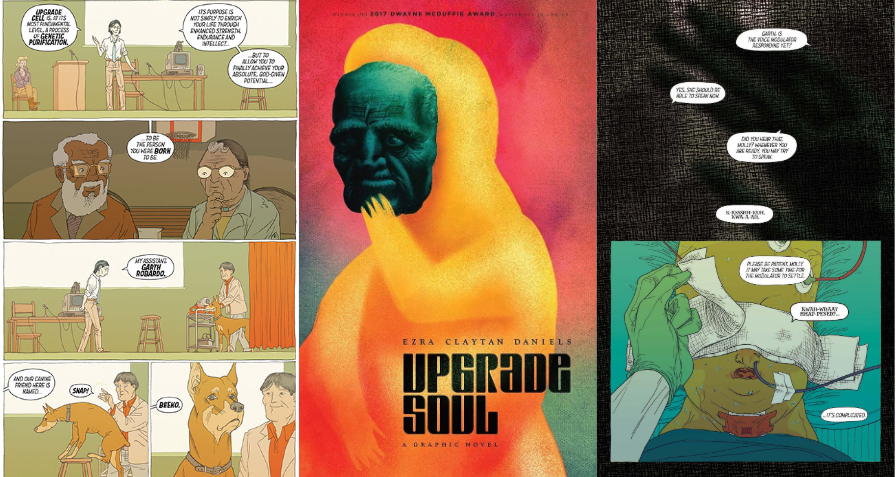
A successful comic book author becomes an investor in cutting-edge (but slightly sketchy) science. He thinks he’s found a way to enhance the bodies of him and his wife, bringing them back to their youth. The results were far more disturbing, leaving them even older than they began, with fetus-looking clones in perfect health and mental ability. The comic focuses on the secrets of the lab, the people who live there, and the couple’s own feelings towards each other coalesce in a rather disturbing story.
I’m not quite sure how I feel about this book. There’s a lot of little things I like about Upgrade Soul: some quiet themes exploring privilege and identity (and big ones exploring disability), some ruthlessly developed characters, and a takedown of transhumanism that so many millionaires are currently chasing. In the end though, I felt a little underwhelmed by this story. It never quite went as far into psychological horror as I was hoping for, and I think it missed some opportunities in the art department to show things other than characters speaking to each other. I sort of felt this would have been a better novel than comic.
Elfquest by Wendy and Richard Pini
Read if Looking For: sword and sorcery vibes, nostalgic (or dated) tropes/plot points, main character energy, evil and danger around every corner
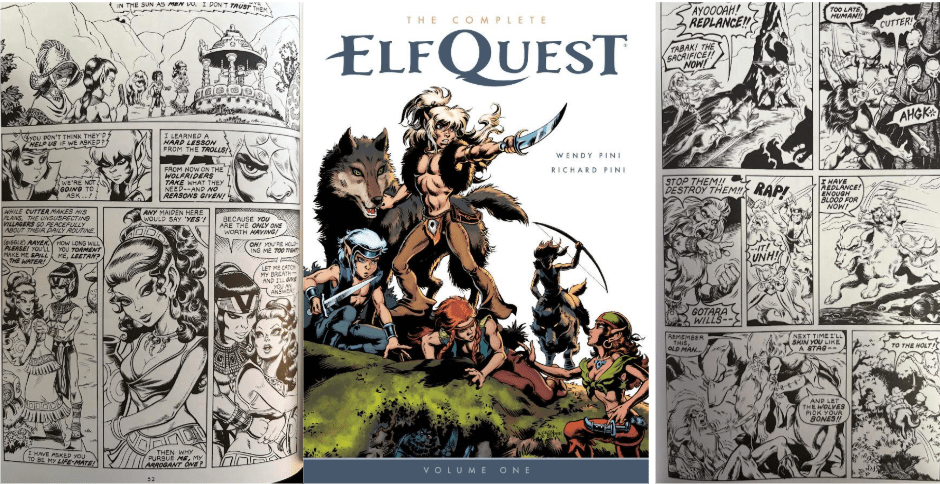
Elfquest is a fantasy comic that was created in the late 70s, publishing more or less continuously since then. The main storyline ended in 2018, but the authors (which have expanded beyond Wendy and Richard) are continuing with more stories in the same world even now. I doubt I’ll ever read the entire collection, but it was an easy choice to try out the beginning portion of this epic saga when I needed a book from the 80s for my graphic novel bingo card.
The first volume of Elfquest feels dated, and readers should be prepared for plenty of moments that wouldn’t pass muster nowadays. The story follows a tribe of elves on the run from humans. They find themselves stranded in a desert community where they meet another (more established) group of elves. Cutter is the tribe’s leader, a skilled swordsman who doesn’t like killing. However, he falls in love at first sight with a desert elf named Leetah. He leads a raid on the desert elvish community to steal her, prompting a romance arc. While Cutter’s actions aren’t endorsed, they’re certainly forgiven more quickly than a generally egocentric desert elvish warrior who is pursuing the same woman. Cutter gets forgiven for his transgressions because he’s the main character and A Good Person, while his rival’s less serious flaws are judged much more harshly. The Pinis clearly wanted to avoid the worst possible version of sexist tropes, so you get some hamfisted moments. There’s a whole ‘you two will compete in three trials for the right to pursue her’ chapter. However, Leetah gives a whole speech about he’s not won her hand, instead simply the right to pursue her. They saw a sexist trope, and instead of doing an interesting inversion or deconstruction of that trope, they acknowledged the issue and made a version of the trope that was only slightly less sexist. That type of thing pops up a lot in volume one.
Anyways, that’s the type of content you’re signing up for with this. Apparently there’s some LGBQ+ themes as the story continues, and I can see myself returning every once in a while to this world and picking up the story for a bit before moving on. It isn’t winning any awards for my favorite comics though.
Prokaryote Season by Leo Fox
Read if Looking for: metaphors for suicidality, an ocean of angst, toxic relationships, yolo gay uncles, nontraditional queer representation
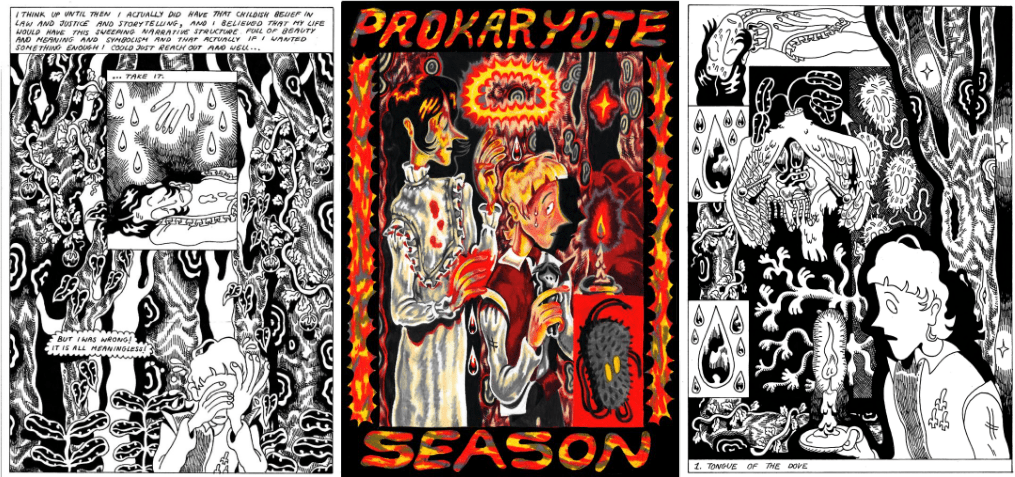
Prokaryote Season is weird. Like, really weird. On the surface, it’s about Sydney who is in love with Lorelie who is dating the most toxic asshole you’ve ever met. Laurelie (and thus, by extension Sydney) dream of becoming single-celled organisms, free from the constraints and demands of mortal life. At an illegal party in the super-poisonous forest, Sydney gets egged on by a literal star person to make a wish, and their wish is for Laurelie to become dependent on them. Laurelie gets sick, and Sydney, the star man, and Laurelie’s partner all go into the forest to save them.
Some of this really worked for me. I liked how stupid and messy the story was; I liked the blunt and unrepentant depictions of mental health challenges – both in isolation and how they can manifest in relationships. Starman is fucking hilarious. However, it never quite clicked, and I think the story would have been more interesting if Sydney’s wish had manifested dependence in some way other than ‘save the mortally sick love interest’. The art style is incredibly dense, rendered in claustrophobic black and white (not a speck of gray in sight). It had the stylings of medieval manuscripts, but it never quite hung together for me. Left me with mixed feelings, but I’m glad I tried it. My gut is that some people are really going to jive with this, or mostly bounce off it.
Castle Swimmer by Wendy Martin
Read if Looking for: mermaids, anime aesthetics, cozy stories, slow burn romance, quick reads
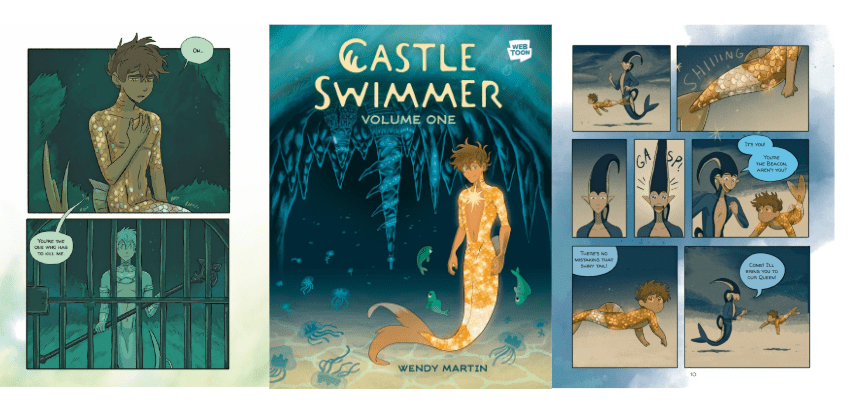
This mermaid story follows The Beacon, whose destiny is to fulfill the multitude of prophecies across the ocean. Unfortunately, one of the prophecies involves a cursed nation of Sharks whose prince must kill the Beacon to remove the curse. The Shark Prince doesn’t particularly want to kill the Beacon (or anyone really) but feels like the injuries and deaths of his people lay at his feet if he doesn’t kill the golden merman who swam into their castle. This was sweet and easy and not terribly memorable. I don’t know that I want to continue, as there just isn’t enough tooth to the story for me to be devoting more time to it. However, I think my kids will love this story, and I’ll buy the rest of the series for my class library. A good book for hot cocoa and some sweet teenage romance.
 Marked for Plot