
Progression Fantasy isn’t a genre I’ve spent that much time with recently. However, as I’ve been clearing out my Kindle Unlimited cache, it popped up and I said ‘fuck it, let’s take a risk on another Roman-coded setting.’ Will of the Many was fun. Not mind blowing, but fun. And I think that’s where I fall with Ironbound. The Holy Roman Empire may consume the minds of straight men, but 700 pages of it was more than enough for me to feel exhausted by the end.
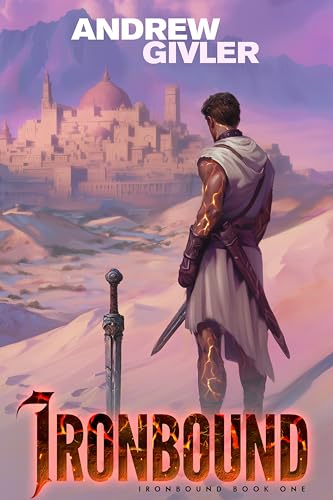
Read if Looking For: an overpowered morally upstanding hero who has been utterly wronged, lots of fight scenes, Roman settings without any of the queerness from actual Rome
Avoid if Looking for: thematic depth, creative use of powers, female characters (even side ones)
Elevator Pitch
Castor has worked all of his (admittedly rather short) life trying to earn the Empire’s favor to gain magic. Few earn the privilege, for the metal granting these powers is a rare resource. The story begins when his school goes through their final tests, determining which students will become elite members of their society. Unfortunately, things go to pieces when a wolf-headed monster attacks the ceremony, and Castor takes the blame. HIs family dead, his life forever changed, Castor vows revenge against the Empire who wronged him.
What Worked For Me
I think this will probably come off as a negative, but I promise it isn’t. Even when I started to think ‘wow, this book is really dragging things out, isn’t it?’ I kept picking it back up, reading the next chapter, and staying up late. It felt a bit like when I used to binge Dominos pizzas. Felt a bit shit afterwards and questioned my life choices, but the process was really enjoyable. If you’re looking for something brutally mindless, with an overpowered protagonist who you know is eventually going to grind every foe under his boot-heel, or the epitome of the ‘whack things hard’ type of wish fulfillment, this is a great book for you. If that’s not the vibe you’re looking for, you probably shouldn’t pick it up.
What Didn’t Work for Me:
The way that Ironbound chose to interact with noble privilege was annoying enough to start pissing me off (perhaps unfairly). In the long tradition of me throwing away my usual plan on not getting too hung up on explaining plot details in my reviews, I’ll toss that out the window if something annoys me enough.
This book really wants to be a ‘fuck the noble pricks’ type story. Most of the enemies are nobles who stab Castor in the back at various points, and the system is corrupt beyond saving. The only problem? Castor is himself a noble, albeit a minor rural one. In fact, a small early plot point is how the only commoner who went to their elite magic prep-school was ignored and bullied despite being the best in their year. On the surface, this set me up for a recurring plotline of the Castor grappling with his privilege (even superficially) and learning to appreciate the strengths of a wide variety of backgrounds. Unfortunately, that all mostly flew out the window, and the story settled into a weird clash of an explicit ‘nobles are evil and shouldn’t look down on people’ message, when the authorial choices really reinforce the idea that nobility will always be better than commoners.
When the first plot twist hits and Castor’s life begins to fall apart, he finds himself drafted into the army. Specifically, he’s in Legion 12, filled with all sorts of criminals who are in the military as punishment, instead of choice. Of the 125 warriors, the 9 nobles (and one commoner who went to noble school) find themselves at the top of the pack. Interestingly, none of the skills learned in that school should have helped in the legions. It’s commented on multiple times that the fighting style is totally different, and that the sympathetic connections they practiced in school (to help with magic) aren’t used in the Legions whose Iron magic is more straightforward. The author couldn’t find it in him to have even a single token murderer or gang member who was as skilled as the nobles from the experiences fighting on the streets. Plus, only Castor and the other nobles ended up getting fucked by society; all the real criminals are here because they committed real crimes.
I got my hopes up again when we meet a thief who got more than a passing mention. I had hoped he’d be introduced as a major main character to join the nobles, perhaps who showed how alternate backgrounds can prove just as useful as Castor’s. Nope, he exists merely to show how great a leader Castor is by taking a whipping for his men, and then later to die dramatically while saving Castor’s life and singing his praises. Over and over this story painted the nobility in the legions as prejudiced and bad, without the author realizing that his treatment of Castor/his fellow nobles was pushing the story in the opposite direction.
It reminded me a bit about China Mievelle’s criticism of the fantasy genre, that it idealizes problematic social structures in the name of nostalgia. Givler wants this story to be an action-packed story about fighting against the odds, but never wanted to commit to what that means for his characters. This is probably an unfair level of criticism against a mindless popcorn book.
Conclusion: action-packed wish fulfillment in a kind-of-Ancient-Rome, but not much more
- Characters: 2
- Setting: 2
- Craft: 3
- Themes: 1
- Enjoyment: 4
 Marked for Plot