
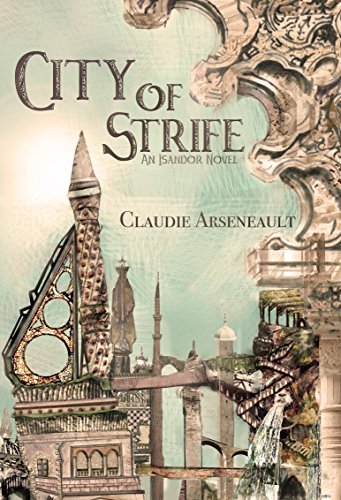
The City of Spires has been on my radar for a while as a great example of what ambitious queer representation can look like. It’s also gotten nods as the modern inheritor to Swordspoint, the seminal Fantasy of Manners book with pioneering queer rep in the 80s. I ended up not loving the book, but I see the appeal and am intrigued to continue at some point in the future. But if you’re looking for a queer ensemble cast, I can’t think of something better than this.
Read if Looking For: many queer identities in one book, ethically upright protagonists, sadistic villains, impassioned monologues
Avoid if Looking For: deep characterization, flashy magic, political maneuvering
Elevator Pitch:
Isandor is a city with class problems. The rich live (quite literally) above everyone, in towers connected by bridges, holding them above the world. The poor are at the whims of the games of the noble houses. And the city plays host to an embassy of an Empire intent on conquering the world. Many different characters lives intersect in this book, connecting apprentice mages with shelter owners with idealistic nobility. Each character’s agendas and concerns are different, but this book lights the match that will set the city ablaze (quite literally). There’s enough going on that focusing on any single plotline will do a disservice to describing what the book is about.
What Worked for Me
The main reason I picked this book up was for the cast of characters, which has been described to me as one of the best representations of queer identities out there. All our lead characters are queer in some way, and while the world doesn’t treat their identities as normal or good (queerphobia is present, but not not the main focus of the book), the book doesn’t feel the need to preach or extrapolate about these identities. The characters exist beyond their gender, romantic, and sexual identities. While not everyone will find themselves in this book (we get a transfem investigator for example, but no transmasc lead that I can remember), I loved how unapologetic this book was about queer identities without feeling forced or awkward. In particular, I resonated with the secretary who enjoys heckling his husband by always using noble titles instead of more casual names.
I did really enjoy the ending of the book. There were a few characters and plotlinse I wasn’t terribly invested in (particularly Arathiel, who grew up in the city but spent the last century in a magic pocket dimension that left him without any ability to feel pain or taste things), which suddenly were pointed in a much more interesting direction by the end of the book. In the end, this story felt like a prologue to something with a lot of potential, even if the machinations of this particular volume didn’t really tick for me.
What didn’t Work for Me:
While the ensemble cast allows Arseneault to indulge in joyful expressions of queerness, I thought she went a bit too ambitious in scope for book 1, and the book suffered for it. There were just too many different POVs. Characters got so little page time that I never felt like things developed naturally. Arseneault is phenomenal at establishing dynamics, but the book never quite convinced me that characters were changing in their relationship to each other, even when the book told us so. Falling-outs lacked emotional weight because I didn’t buy into the connections the characters had seemingly built over the month or so this story took place in. Similarly, characters who had only spent 10 pages together in the book (and didn’t know each other beforehand) were suddenly risking everything on the basis of their friendship for each other. I wish she had slimmed down the cast to 4-5 POVs in book 1, expanding in later stories. Honestly, I think entire plotlines could have been stripped out for later books, allowing this story to grow more organically. I think this will sort itself out in sequels, as I see how this book set up plotlines for sequels at the expense of what happened in this story.
My other large concern, and one I worry won’t shift in the following book, is the lack of grittiness in our characters. For a series that is advertising itself on political maneuvering, every single lead character being relentlessly morally upright is a strange choice – especially since the antagonists are similarly cartoonish in their villainy. The nobles are the only noble house that’s taking risks to improve things for those without wealth in the city. Another owns a shelter that takes anyone in (I actually found the idealistic nature of this shelter especially grating, since it really brushed aside the difficulties that even the best shelters face. It didn’t feel like Arseneault had a good grasp on homelessness for how prevalent this was in the story). One of our leads is an assassin yes, but puts as much money as they can towards helping others. The members of the evil racist homophobic empire are innocent victims at all times. It was all just too idealistic for me to feel like there was going to be interesting political tension. I don’t need this book to be as grimdark as something like Game of Thrones, but I did need some nuance and for the book to not feel like a thinly veiled morality lesson on how people should behave. Moral themes are great, but they need to be driven by interesting ideas and conflict, not a series of impassioned monologues and ethically perfect characters.
Conclusion: a mildly disappointing political fantasy with great queer representation and potential, but that fails to manage character relationships and moral ambiguity that form the core of good political fiction.
- Characters: 2
- Setting: 3
- Craft: 3
- Themes: 3
- Enjoyment: 3
 Marked for Plot