
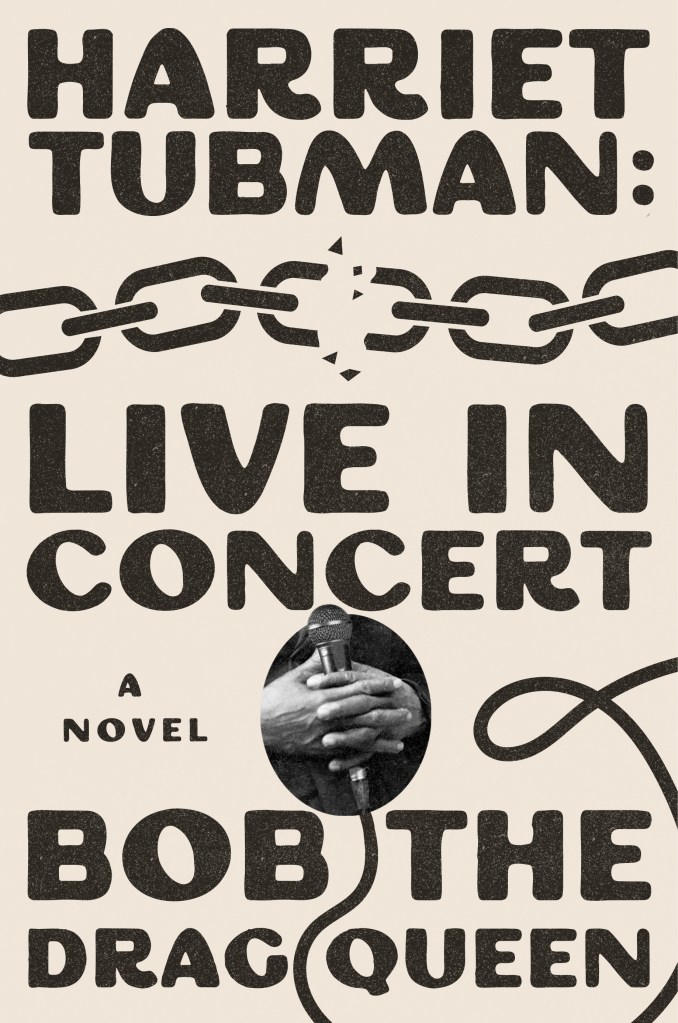
When celebrities announce that they’re coming out with a book – a book in one of my favorite genres no less – I tend to get skeptical. Bob the Drag Queen is a phenomenal comedian, performer, and entertainer. That does not make her a good author necessarily. Still, at only 233 pages and narrated by Bob herself, it wasn’t difficult to throw a library hold at this book and tackle it over a weekend of deep cleaning. This book is no masterpiece, but it was solid, entertaining, and blended modern queer struggles with lessons on slavery in a way I hope others emulate. Also, how I could I not pick up a book called Harriet Tubman: Live in Concert? It’s definitely on the short list for best title of the year so far.
Read if Looking For: middle aged queer leads, music performances (in the audiobook), self-liberation, a broad range of stories from history
Avoid if Looking For: deep historical analysis, Bob’s comedic persona, romance plotlines
Elevator Pitch
Darnell’s career as a music producer is more or less over when historical figures begin returning to the world. However, Harriet Tubman calls him in to help her produce an album sharing her story with the world. She and her team (also returned from the same era, and Tubman’s friends and associates) share their stories with Darnell as he grapples with his own internal struggles. Can Harriet Tubman help Darnell just as she’s helped so many others?
What Worked for Me
The centerpiece of this book is Bob’s clear and undying reverence for Harriet Tubman. You can tell how much he admires her on every page, and he brings her to life as a force of nature. Her no-bullshit personality is matched only by how much she cares for the people around her. She is tender, abrupt, firm, and very religious. You’ll learn lots of little bits of information about her life – shared by her, her companions, or Darnell’s own research – some of which will surprise people who don’t know much about her beyond the basics. In interviews, Bob has described her as one of America’s original Superheroes, and that atmosphere permeates the entire story. In fact, the story hinges on it, and this was a roaring success.
In a move I didn’t expect, Bob also decides to feature many of his side-character’s stories prevalently, exploring more than just Harriet’s stories. One of the early sections of the book is a former house slave talking about her experiences. You’ve also got a Quaker little person who describes how his relationship with his faith led him to fight against slavery, Harriet Tubman’s little brother, and a few seperate monologues about how much the crazy motherfucker John Brown did to try and end slavery. I felt like I left this book after having gone to a museum: I learned a little bit about a lot of different things, and I’m the child of a historian whose specialty was in Bleeding Kansas (so none of the John Brown stuff was very new to me). Really happy to see how Bob tackled these topics, and I think it was the absolute right choice for a novella.
I’ve talked a lot about the more historical elements of this book, but I think that Bob actually did a wonderful job balancing this with a very natural ‘modern’ plotline. You’ve got Darnell’s imposter syndrome at feeling like he can’t possibly be the person Harriet Tubman wants to work with, his own complicated relationship with religion chafing against Harriet Tubman’s staunch praise of the lord and invitations to go to Quaker meetings. You get his experience of being gay in the entertainment industry before it was widely accepted, and how that affects his willingness to open up to people now. And you get the development of the music, a little peak into Darnell’s head as an artist.
In general, I thought this book was tightly written, focusing exactly on the things that it should be for its length and density.
What Didn’t Work for Me
I think that most of Bob’s choices are the right ones in this book, but I also think that I need to flag a couple issues that will come up for some. First off, if you are a fan of Bob’s, don’t expect his normal comedic aura to be on display here. There’s humor for sure, but not many places where you’re going to be laughing out loud while scrubbing your shower. It’s a pretty big departure from what many know Bob for, so it’s worth flagging here.
The other main area I anticipate someone may bounce off this book is that it tackles history with a very wide lens, but not a deep one. This is not a biography masquerading as a science fiction novel; it is not a historical analysis of slavery the underground railroad, or various abolitionist movements. You get bits and pieces of all of those things, of course, but never a thorough exploration of them. I compared it to a museum earlier, and that comparison stands here. Speaking generally, museums are meant to spark interest, build empath, and teach the basics. They are not designed (with some exceptions) to be as comprehensive experiences you leave with deep knowledge of a subject. They are launching points to drive you to seek out more knowledge, immersive experiences that make history tangible in some small way. History buffs may leave this book unimpressed.
Finally, at the sentence level this book is fine. It doesn’t vanish in to the background, nor does it show any particular skill. Bob’s lack of experience as an author showed in how he tackled language. This wasn’t necessarily a deal breaker for me, but I think the quality of writing itself is more comparable to the medium-tier self-published scene than something that a major publisher would usually pick up. You’ll know whether this is an issue for you or not.
Conclusion: a joyful celebration of Harriet Tubman mixed with some history lessons about slavery, all mixed up with an insecure music producer’s journey to becoming his best self.
 Marked for Plot
One thought on “Harriet Tubman: Live in Concert”