
After trying to hype How to Survive This Fairytale everywhere I could, I got recommended the Fables comics as another take on a dark fairy-tale mashup story. Sort of like if the TV show Once Upon a Time had been produced by HBO instead of Disney, which I think is a pretty good comparison point. This review covers the first three volumes ( Legends in Exile, Animal Farm, and Storybook Love). I’ll definitely be reading more of this, but I didn’t love it so much that I’m putting the rest of my backlog on hold to keep pursuing it.
Read if Looking For: fairy tales with blood, gore, and sex; morally dubious characters, traditional American Comic Book Art with modern storytelling sensibilities
Avoid if Looking For: thematic depth, emotional art styles, niche or non-European fairy tale references (so far)
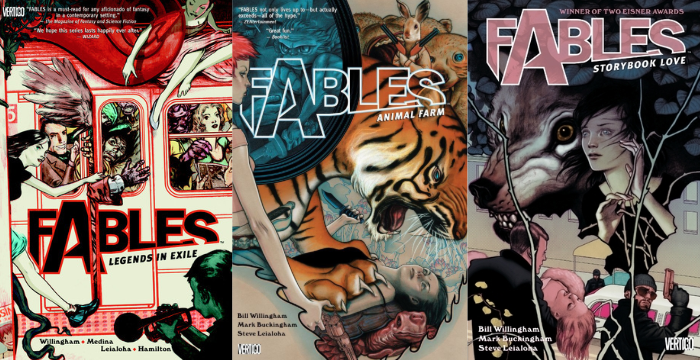
Elevator Pitch: the basic premise of the series is that fairy tale characters were driven out of their homeland by The Adversary, and they now live semi-immortal (and for the more popular fairy tales, invulnerable) lives in hiding in the mundane world. The first and second volumes tackle complete story arcs (a murder mystery around the death of Rose Red, and an armed insurrection at the upstate New York lands wehre non-human fairy tales live) while the third volume contains several smaller stories. So far the major characters are Snow White and Wolf as the clearest protagonists, Rose Red, Jack, Prince Charming, Bluebeard, the Three Little Pigs, and Goldilocks, with minor apperances from a much broader range of fairy tales.
What Worked For Me:
One of my favorite parts of Fables was its sense of pacing. Too often, comics with a regular release schedule and set number of pages struggle with this: scenes condensced to make space for all the required elemens of the week, big twists at the end of each issue, and a lack of chapter-to-chapter plot development. Fables had none of these challenges. In both the full-volume stories, and those which only took a small portion of a single book, it felt like the amount of story fit the page count, and narratively read much more like a graphic novel (a format which I find does better with plotting and pacing). The stories were solid, with a classic rising and falling action. It even spanned genres. You’ve got the noir mystery of the first volume, an action comic in the second, and the third had elements of thriller, romance, and slice of life. It just really worked solidly in terms of good fundamental storytelling.
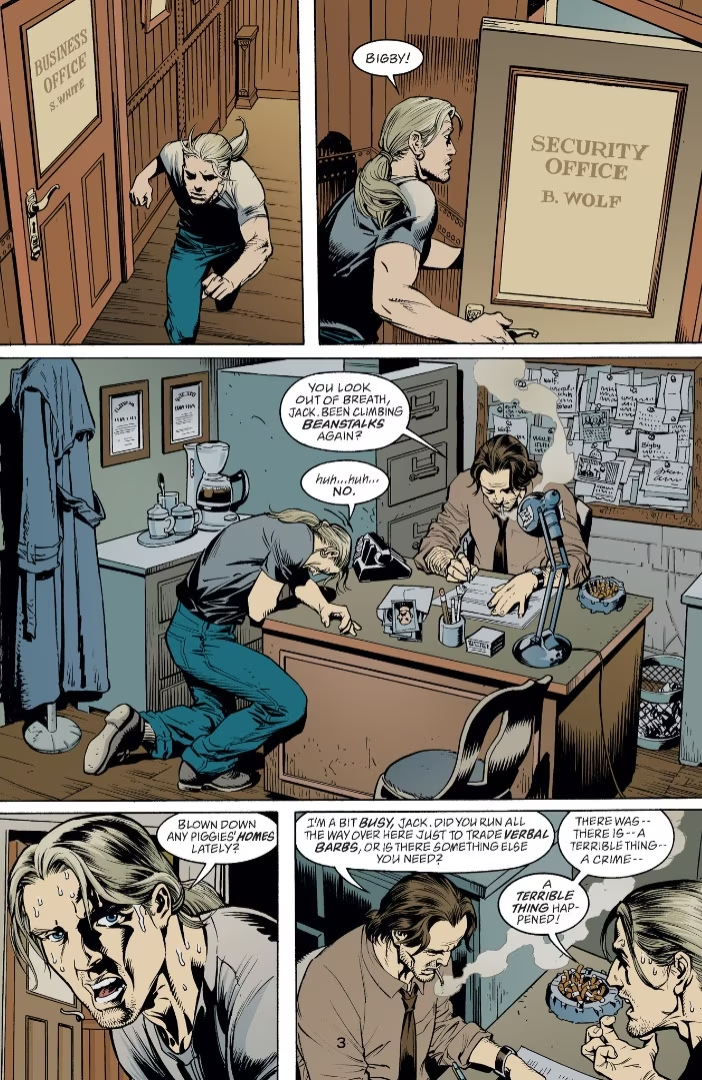
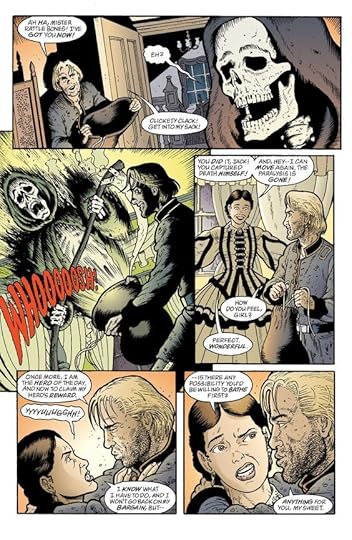
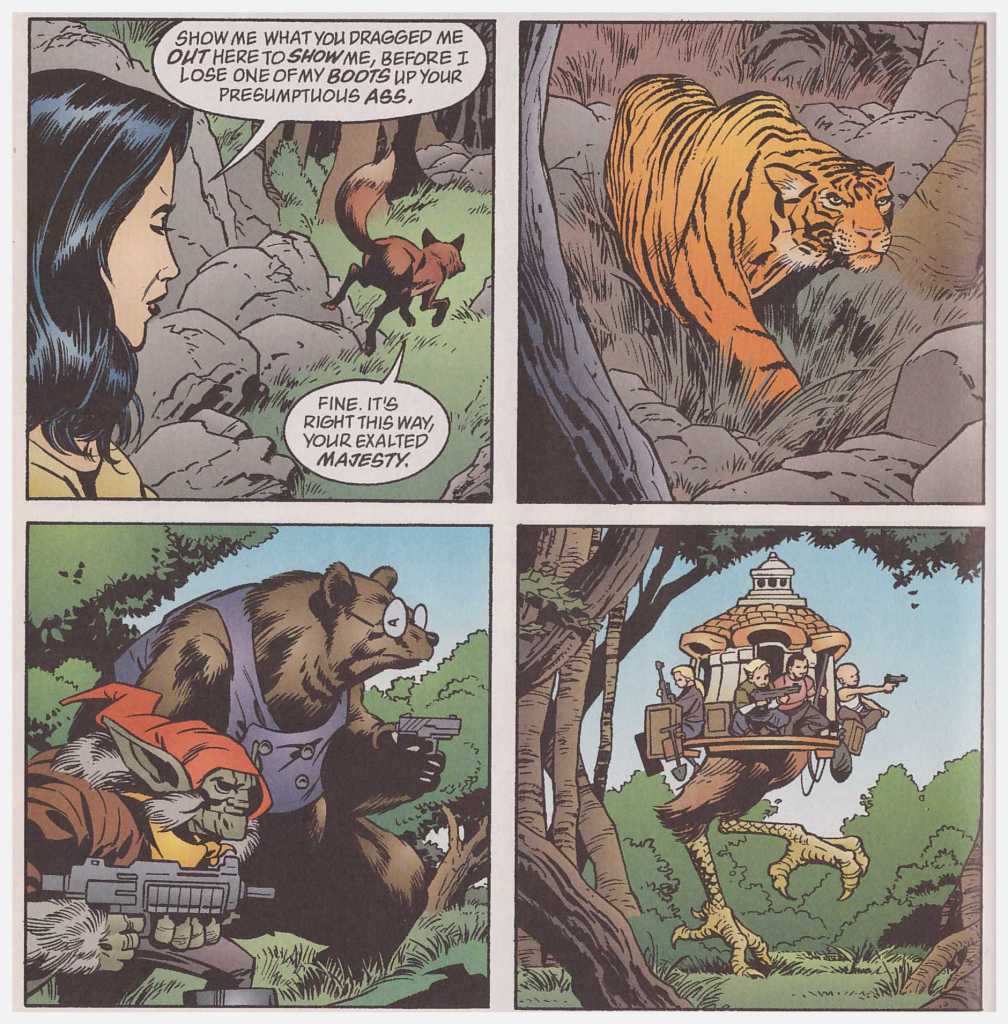
Art wise, this series falls squarely in the American comic book tradition. Typically, this isn’t my favorite style of illustration for comics, but it really worked here. Anything simpler or less grainy would take away the adult tone of the storyline, and fairy tale stories interested in tackling more adult content need this level of grittieness unless they want to go full-on ironic cartoon artwork. I want to call out in particular the great use of space in the layouts. Traditional panel spreads are common, but spreads and splashes are both used to great effect, especially once the team starts taking more artistic risks in book 3 that really paid off.
Finally, I (mostly) like the approach to characterization Willingham takes. It’s a pretty large cast, so none of the characters are getting much depth. Instead, they take a few key characteristics to begin with, layering a bit more into each character as the series progresses. Bluebeard is evil and lecherous. Jack likes to steal things. Prince Charming is a philanderer who will mooch off anyone and everyone. Goldilocks is moderately psychotic. It works smoothly, and the illustrations really lend themselves the the character’s personalities. Prince Charming is incredibly punchable. I’m hoping as the series goes on that characters get deeper and more complex, which can be done in comics effectively, but so far Fables doesn’t seem like the type of comic asking to be taken terribly seriously.
What Didn’t Work For Me:
My biggest issues with this series is the lack of thematic development (or intention to head in that direction). It limits itself to grimdark fun, which is fine enough, especially since each volume only takes an hour or two to read, but it gives me pause for a 22 book series.
Most notably though, is that I’m having trouble figuring out where the line between authorial and narrative endorsement of character actions lie. I like that there are some pretty evil characters who are blatantly portrayed that way (Jack and Bluebeard both immediately spring to mind as troublemakers whose intentions may be darker than they first appear), but the more problematic aspects of Wolf and Snow White seem utterly unremarked upon, and they’re largely presented as morally upright characters living in a grim and brutal world. Wolf threatens a nosy journalist by blackmailing him with faked evidence of child pornography without the narrative placing that as … not a great way to handle the situation – but when a more villainous character kills said journalist it’s portrayed as very bad how could you?
Meanwhile, there were two thematically disonant moments in Animal Farm that stuck with me in a bad way. The first, Snow White wouldn’t acknowledge the effective improsnment of all non-human fables – understandable given the difficulties keeping them secret – but she didn’t really show any sympathy for their plight and mostly tells them to suck it up and appreciate how good things are for them. The second, that they were frustrated that the appointed mayor of the non-human settlement was a human, depriving them of representation. Yes there was a brutal rebellion happening, but Snow White brushed off both concerns, and didn’t make any moves to remedy or allievate them in the handling of the situation after the conflict had been resolved. While this perhaps hints at Snow White’s own problems as an administrator, the narrative didn’t seem interested in acknowledging this, and the brutal rebellion came off as violent extremists (and they were) without any legitimate grievances (it seemed like there were) that helped set them on this path. Now, maybe both Snow and Wolf will eventually get treated the same way the narative treats characters like Jack and Bluebeard, who slot more easily in the villain role. That isn’t the case from the first several volumes, however.
To me, this shows a potential lack of self-awareness in the themes being presented in the books, as opposed to acknowledging that our core lead duo may be not always be in the right. While this isn’t a problem in isolation, it definitely keeps the first three volumes from living up to their potential, and it really worries me when Volume 7 is titled Arabian Nights. If I’m already having some slight issues with how the books are morally representing some actions in a European context, how will it handle fairy tales from around the world? Haven’t read it yet, so I can’t know, but it gives me pause.
Conclusion: an interesting grimdark adult take on fairy tales, but one that seems to have some blinders on to the messages encoded in the stories
- Characters: 4
- Worldbuilding: 4
- Themes: 1
- Craft: 3
- Enjoyment: 4/4/3 (books 1/2/3 respectively)
 Marked for Plot