
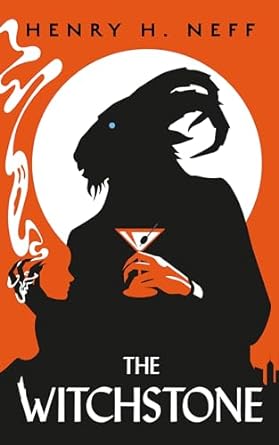
Good Omens is a book that casts a very long shadow. Even when books aren’t explicitly setting out to be humorous, it’s tough to avoid comparisons when your lead characters are angels and demons. In this case, we’re only working on the demon half of the equation, but with humor as a core part of the story’s pitch, it immediately had a lot to live up to. Unfortunately, I found The Witchstone to mostly be a disappointment, though I wouldn’t go so far as to call the book a bad one.
Read if You’re Looking For: plucky humans, sassy demons, some casual tentacle horror
Avoid if You’re Looking For: humor that’s insightful and cutting, tonally consistent books, the next Good Omens
Elevator Pitch
Laszlo (800) is a demon, a nepo-baby, and about the laziest curse keeper you could possibly imagine. He ignores his job of cultivating misery in his assigned family and instead messes around finding ways to swindle enough money to buy the newest Gucci shoes. Unfortunately, a new manager gives him an ultimatum: shape up within a week, or get turned into primordial ooze. The Drakeford family meanwhile, is cursed to turn into monsters, slowly becoming more and more violent and deformed until they need to be put down by their own children. Maggie (19) and Lump (11) get dragged into Laszlo’s orbit when he arrives on their doorstep, claiming he has the keys to solving their family’s problems.
What Worked for Me
I didn’t love this book, but the high point was definitely the supporting cast of characters. Laszlo was an engaging enough viewpoing character (Maggie less so), but we get a host of side characters that were fun and engaging to meet. Most of them are demons: an arrogant overachiever promoted to be Laszlo’s boss, a pawn broker who deals in minor magic objects, a 5,000 year old demon who is in a cold war with the formal demon hierarchy. Maggie’s mother was another high point, especially when she and Maggie got into it about the curse, and whether or not her mother’s decision to stay with the cursed family should give her any say in how they handle Laszlo’s arrival.
What Didn’t Work For Me:
I think my biggest problem with The Witchstone was that it was only mildly amusing, instead of fully funny. Laszlo has some nice one-liners sprinkled throughout the book, the bureaucracy of demonhood is amusing, and there are some silly situations that characters find themselves in. But beyond that, I don’t think Neff did a good job of capturing the magic of comedy. Instead of getting the Chattering Order of St. Beryl, we get a rather weird conversation where Maggie and Lump walk in on Laszlo preparing for a date with an escort, and trying to avoid telling an 11 year old what pornography is.
Part of this is because The Witchstone is simultaneously trying to be 1) a comedy, 2) a horror book, 3) a high stakes urban fantasy story. But it never quite manages to blend these together, instead just ‘switching modes’. You’ll get characters slipping as a magic pot spews infinite porridge (an important part of breaking any curse) and then pivot into a nighclub scene where Maggie’s curse-driven attempted rape of a finance bro is described in uncomfortable detail. They just don’t mesh well, and Neff didn’t find places where comedy and horror could exist at the same time. Even the epic fight scene at the end left behind the horror and comedy elements, presenting itself as a fairly straightfoward end-of-book fight scene you could find in any urban fantasy novel.
Ultimately though, even when taken in isolation, I don’t think any of these elements is ‘great’ other than the urban fantasy mystery plot elements (and those receive the least attention by a large margin).
In Conclusion: a rather mediocre story that doesn’t quite nail humor or horror, but was fine enough to listen to.
- Characters – 3
- Worldbuilding – 3
- Craft – 2
- Themnes – 2
- Enjoyment – 2
 Marked for Plot