
In my constant hunt for the perfect romance and the perfect Gay Fantasy book, I’ve read a lot of good books and a small mountain of bad ones. I’d initially brushed off Sorcery and Small magics based on the pitch, but after a series of glowing reviews, I decided to give it a try. And what I found was an enjoyable (if not revolutionary) story that was a great book to listen to while packing up boxes for my upcoming move.
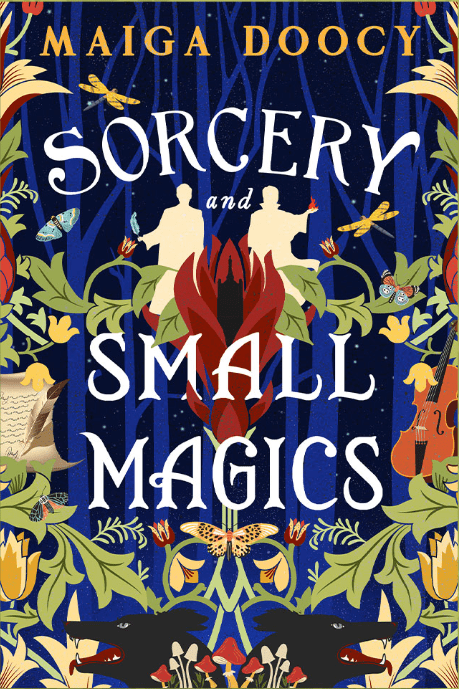
Read if Looking For: wholesome and casual writing, casual bickering, violins
Avoid if Looking For: traditional Romantasy, books that develop theme rigorously
Elevator Pitch
Leo is in school to develop his skills as a Scriver, someone who writes magic for Sorcerers to cast. Only he doesn’t want to be a magician, or at school, or paired up with his arch-nemiss Grimm, a prodigal talent who matches Leo’s personality about as well as personal responsibility does. When a magical control spell gets cast accidentally on Leo, however, he finds himself unable tied to Grimm far more tightly than he ever wanted to be.
What Worked for Me
I was a big fan of this book (despite what the lengths of my negatives might indicate). I appreciated how the pacing in this story was a lot slower, and that it wasn’t a repeat of the same hamfisted plot pushed to the side so that romance could flourish. Characters (mostly) acted in sensible ways, and miscommunication wasn’t a driving plot point. While it’s unfortunate that the bar is that low for gay romance, that’s where we’re at right now.
Leo is a great example of this. He’s a very classic gay romance protagonist trope: his life is a hot mess, he sleeps around, and he uses sarcasm in place of having functional relationships. Also something mysterious and dark is going on in his past that’s haunting him. However, he didn’t read as brutally annoying as most of those characters were, and it came off as a complete character instead of cardboard cutout of someone to go on an emotional journey while finding love.
If you’re looking for something enjoyable, lighthearted, and fun, this is a great book. It doesn’t reinvent the wheel, but it definitely stands apart from a lot of the poorly written romantasy that it appeared to be at first glance.
What Didn’t Work for Me
Romantasy has the potential to be utterly phenomenal. Books like The Darkness Outside Us, Captive Prince, and Running Close to the Wind all manage to have great romance plotlines that co-exist with extremely strong writing on the fantasy/science fiction side of things as well. Sorcery and Small Magics didn’t achieve that for me. Instead, it combined story elements in discordant ways that left me feeling vaguely unsatisfied, even if I was enjoying what was happening in the book.
The book presented early-on as a traditional romance. The magic and school were both silly, and designed to force our enemies-to-lovers into contact. A school teaching magic that forces people who write and cast to work together making the choice to keep their students working only with 1-2 partners their whole school career is utterly baffling and makes no sense. The magic compulsion charm was one of the better forced-proximity gimmicks I’ve seen, though even it didn’t totally pass muster in my mind. The stage was set for a cute bickering couple to come to care for each other while trying to break a comedically inconvenient curse.
Only that didn’t happen. I kept waiting for the romance to kick in, and kept waiting, and kept waiting. It stayed resolutely focused on the more fantasy-plot elements until about the final 20% of the book. Unfortunately, that focus made the campy romance setup feel underdeveloped. I think the book would have been more successful in this regard had it treated the fantasy elements with a bit more gravitas. Take some cues from Name of the Wind in how grounded the classes are. Take the strange monsters in more of a horror direction (I kept thinking that Butcherer of the Forest’s style would be great here). Engage with the realities of control magic in a more serious way (The Storm Beneath the World does a phenomenal job of a protagonist grappling with the daily issues of having the power to control others by accident).
And the kicker to all of this is, that if the romance plot line had been more traditional, I wouldn’t have cared about any of this. Romance’s strengths lie in taking stupid situations, throwing a pair of lovable (or hateable) characters at each other, and letting chemistry do the rest. But when you remove the lynchpin of a progressing romantic connection, you’re left with a paper-thin fantasy that could have been more ambitious or ridiculous. It just needed to push further in one direction.
That’s a lot of words for me to say that I enjoyed this book and will definitely read the sequel. But it doesn’t hit my list of greatest romance/fantasy hybrids out there.
In Conclusion: A charming and simple read. A good fit if you want a slow burn romantasy
- Characters – 4
- Worldbuilding – 3
- Craft – 3
- Themes – 3
- Enjoyment – 4
 Marked for Plot