
I stumbled on this book as I was hunting down novellas for a genre fiction unit I plan on teaching soon. Books that invoke older storytelling techniques and moods are a big draw to me, and The Lies of the Ajungo has the feel of lots of classic fables and myths in it’s style and presentation. While not technically a debut since Utomi released a novel a month earlier, this book shows a remarkable level of mastery over pacing and tone for someone so early in their publishing career. The sequel is on my shelf right now, calling my name to grab it soon.
Read If Looking For: novellas that don’t overextend themselves, fable-esque stories, sassy aunties
Avoid if Looking For: complex and layered worlds, flashy magic
Elevator Pitch:
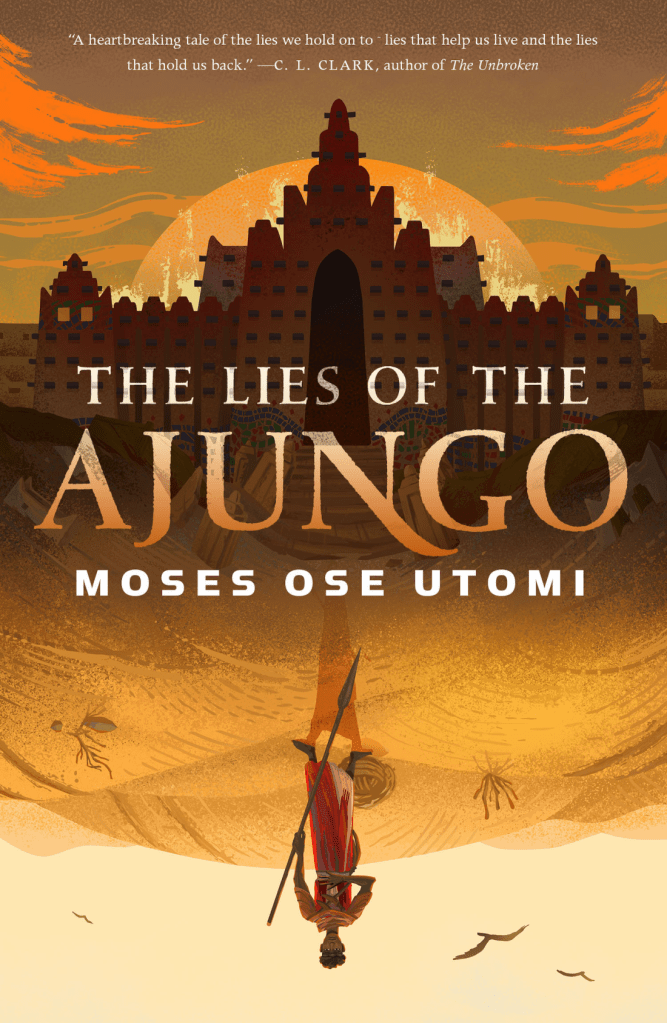
Water is scarce in the City of Lie. To appease their overlords, citizens of the city cut out their tongues in exchange for access to water and food. Tutu isn’t yet old enough to lose his tongue when his mother grows ill. To save her life, he goes to the city’s rulers. In exchange for enough water to keep his mother alive, he will journey to try and bring back water for everyone in the city. He is not the first to take this quest, but none of the other children have ever returned.
What Worked for Me
Quiet books are often looked down on in Fantasy circles. The genre romanticizes flashy magic, epic quests, and grand character arcs. This book heads in a different direction. It is a simple and straightforward story told in clear language. You’ll find lots of classic storytelling hallmarks: things come in sets of three, wise mentors abound, and Tutu ends up being more special than you ever thought. There’s no pretense that this is meant to be taken as realistic, or that we should be fully immersed the history and realities of the world. It is a parable, seeking to explore a message about class and power through story form.
Despite that straightforward nature, Utomi continued to surprise me with choices he made. Things that bugged me, including the neat and tidy nature of how the setting was constructed, were resolved in satisfying ways by the end of the book. And at 89 pages, it was a small enough commitment for what I got out of it that recommending this book is an easy choice.
What Didn’t Work for Me
In a novella, especially one this short, you can’t have everything. Narrowing scope is important, and Utomi’s laser focus on classic storytelling techniques meant that other things were going to fall by the wayside. You won’t find layered and nuanced characters in this book, or a setting that feels internally consistent at every point. I don’t think this could have been changed – especially at such a short length – without sacrificing a lot of what I loved about the story. It’ll be a bad fit for readers who are looking for a sense of realism and grounded settings in their reading
In Conclusion: a fable of a story about a young boy on a quest to find water and save his mother. Short and sweet.
- Characters – 3
- Worldbuilding – 4
- Craft – 5
- Themes – 4
- Enjoyment – 5
 Marked for Plot
2 thoughts on “The Lies of the Ajungo”