
It’s rare that a one line pitch for a book makes me immediately spring for a novel (Lesbian Necromances in Space didn’t get me for Gideon the Ninth) but when I heard ‘women’s rights movement in an industrial-age Cairo analogue” this went straight to my bookshelf. And while the description isn’t perfect – it should mix in some Avatar the Last Airbender references – it’s pretty darn close, and an excellent execution of that concept.
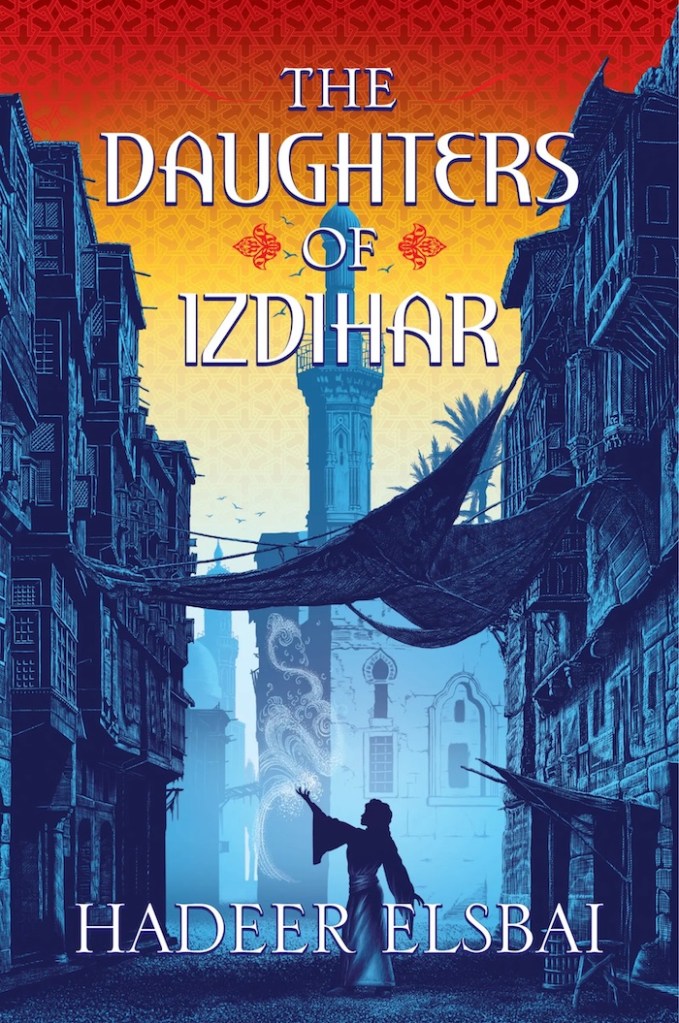
Read If Looking For: nuanced examinations of feminism and misogyny, complex relationship dynamics
Avoid if Looking For: novel depictions of magic, violence-forward stories
Elevator Pitch:
This book follows two women: Nehal, a noblewoman in an arranged marriage who wants to join the army, and Giorgina, who works in a bookshop and is grappling the love of her life got marrying to Nehal against his will. The book’s primary focus is how each of them interacts with the women’s rights movement ‘The Daughters of Izdihar’. There are protests, speeches, multiple prison cells, anti-weaving (bending) sentiment, and a looming war with the neighboring country.
What Worked for Me
The star of the show in this book is absolutely our two leads and what they bring to the table in terms of seeing issues from multiple perspectives. The thematic development of how feminism tends to look very different for wealthy and privileged women than those with fewer opportunities and options was very good, and similarly how the same movement meets the needs of lesbian and straight women differently. Elsbai worked these ides into the narrative in ways that felt natural, as each woman grappled with the perspectives and challenges of the other, which was delightfully not as straightforward as you often see. The themes aren’t particularly difficult to extract from the text – it’s fairly on the surface – but the ideas themselves are good ones, and worthy of being a focus in the story.
Similarly, I though she did a wonderful job with the world. Both creating a sense of place and time, but also in how casual misogyny seeps into so many parts of a culture. Some is pretty typical: safety concerns from women, aggressive guards, that sort of thing. Others are a little bit less common, such as acknowledgement of how well-meaning ‘allies’ are oftentimes not actually helping in ways beyond making themselves feel good about themselves. Centering the story around a women’s rights movement was a very successful choice to anchor the parts of the story that really shone.
What Didn’t Work for Me
Overall not a ton of things that were bad. The magic is very reminiscent of Avatar the Last Airbender minus the connection with martial arts (same four elements, lots of similar uses, etc), and the plot was relatively predictable and carried by the character work for of the cast – but especially the two leads.
The ending left me with mixed feelings. It was probably the best paced part of the book. Lots of great moments of escalation and dramatic resolutions/subversions of earlier plot points. The ending was one that left me excited for a sequel … but also a little fearful. The lack of interest I have in the magic of this world makes me worry that a sequel with a more combative or magical focus will leave me bored. Time will tell, but I’m definitely going to read the sequel.
In Conclusion: A great examination of feminism and misogyny with an underwhelming use of magic.
- Characters – 4
- Worldbuilding – 3
- Craft – 4
- Themes – 5
- Enjoyment – 4
 Marked for Plot
One thought on “The Daughters of Izdihar”