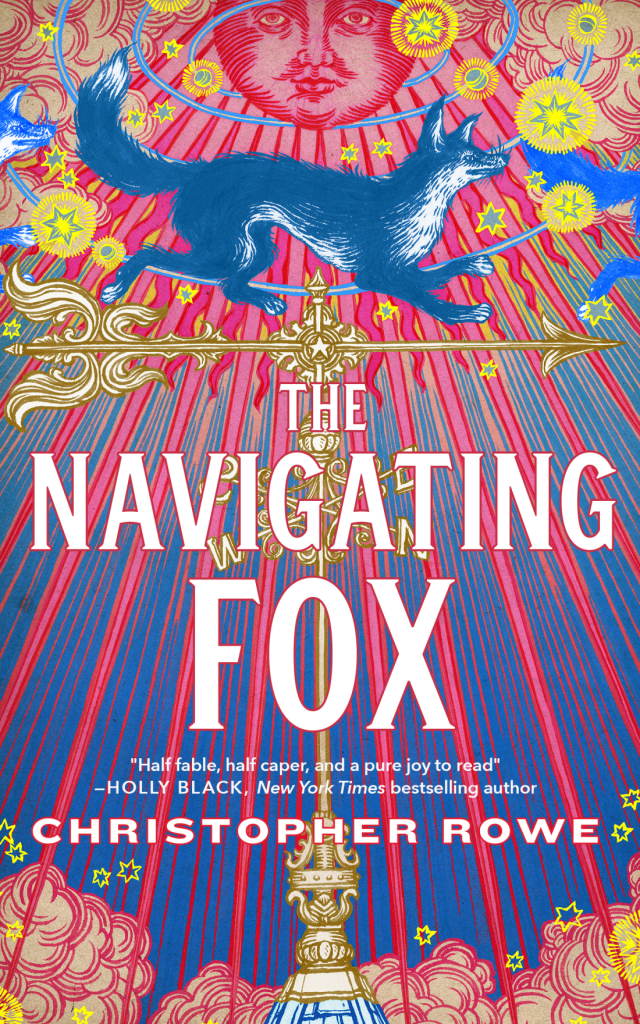
Foxes have been a thread through my reading for around a year now. Fox characters, humans named Fox, and shapeshifting foxes. All over the place. So, when I saw some intriguing reviews for The Navigating Fox, it felt like fate that I pick it up. What I found inside was an intriguing, but perhaps underdeveloped novella with a fresh feeling that I haven’t seen in fantasy before.
Read If Looking For: Arrogant priests, fable vibes, talking animals
Avoid if Looking For: stories that answer questions they pose, action
Elevator Pitch:
In a world where some animals have sapience through alchemical processes, Quintus is the only fox to have the privilege. He is a navigator, back from a particularly disastrous expedition and facing calls for consequences by the sister of one of his companions who died on that journey. Backed into a corner by these circumstances and a priest with information he desperately needs, he promises to lead another expedition to the gates of hell itself.
What Worked for Me
Rowe has the rare gift of being able to make characters come alive with a single sentence. The animals of the world in particular, were lovely. Quintus is a great lead to follow, sardonic and curious and a little dramatic. The cartographer raccoons Foci and Loci were little nuggets of joy. And Something Dangerous, a bison scout they encountered while traveling, could have had an entire novel written about him that I would read in a heartbeat.
I also appreciated how the book approached representing indigenous cultures. It feels like many non-indigenous authors simply ignore these communities in their writing. We didn’t see much of it, but the characters were as diverse and wonderful as the cast of travellers, and the book was very interested in exploring how differing cultural values affect communication, especially when one side considers itself superior.
What Didn’t Work for Me
Normally, I feel like books could chop off 50 pages and be much the better for it. The Navigating Fox is the rare case where I feel like the author would have benefitted from working in a full novel format instead of novella. As it stands, he’s trying to fit too much into 160 pages. In particular, the decision to shift back and forth in time between the two fateful expeditions meant that neither had time to really get the attention they needed to feel complete and fleshed out. The first expedition in particular was frustrating in how little attention any single element got, and could largely have been excluded in its current form. Expanding to a full novel would have allowed him to balance both properly.
An expanded format also would have given him the opportunity to flesh out the world more. I realize that part of the goal of this book was to leave questions unanswered, but so many elements and characters got introduced but didn’t resolve in any way (let alone a satisfying one) that make me think more space was the answer for this particular book. There’s good bones here, but it just needed more space.
In Conclusion: A story with fun characters and an interesting world that ultimately fell short because of its truncated length.
- Characters – 4
- Worldbuilding – 4
- Craft – 2
- Themes – 3
- Enjoyment – 3
 Marked for Plot