
I’ll be honest that Masquerade was a bit of an impulse purchase. Heterosexual romance focused books aren’t something I read a ton of, but the idea of a Persephone story in precolonial Africa was intriguing.
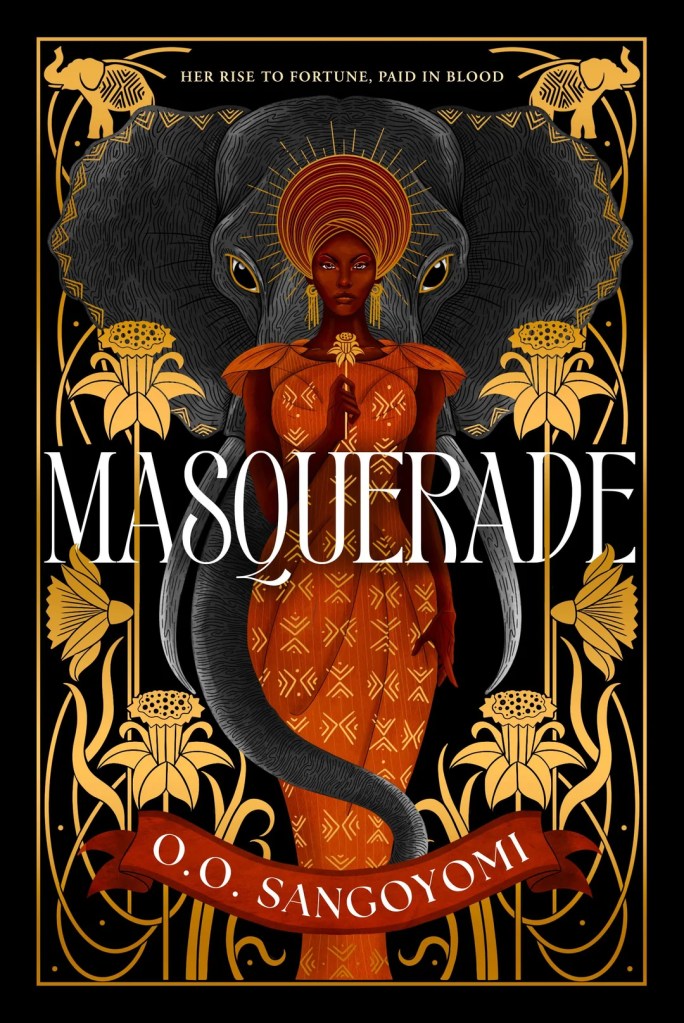
Read If Looking For: romance with a twist, competent characters, evil characters
Avoid if Looking For: high fantasy
Elevator Pitch:
Òdòdó is a witch (more specifically a blacksmith) one of the many women who craft weapons and tools all while being looked down upon. And then, after her town is captured, she ends up dragged across the continent engaged to the king of Yorubaland, who claims he will do anything to earn her love. But she quickly starts finding that she went from one cage to another; this one is just more gilded. But she also finds herself attracted to the King, and the tension between these two ideas forms the core of the book.
What Worked for Me
I really enjoyed the setting of the story (with one big caveat noted in the next section). I’ve grown to love anti-colonial fantasy as a space that is rich with thematic depth that authors are exploring, but precolonial fantasy (or a world imagining where colonialism didn’t exist) is not something I’ve read much of at all, and I really appreciated this portrait of precolonial Africa. The world felt very grounded and tactile, which is one of the things I look for in historical pieces like this.
Additionally, I thought Òdòdó was a refreshing lead. She was competent, but not moreso than you’d expect from someone from her background. She didn’t do dumb things because of miscommunications, and took action in logically consistent ways. There weren’t really times where I had to look the other way to keep the story going, which is pretty rare for me these days.
What Didn’t Work for Me
The biggest downside for me was, I think, in the execution of some of the themes and moods that Sangoyomi was aiming for in this book. At its core is this really complex relationship between Òdòdó and her fiancé, but it never felt like the relationship went past surface level. It acknowledged how you can love someone and find them stifling, but I didn’t breathe that emotion in through the character. I didn’t feel it in my bones the way I wanted to. There were moments in this book that should have ripped my heart out, or had me gnashing in anger. And it never quite got me to any of those points. That lack of emotional depth ended up sabotaging some of the more important elements of the story, as the romantic relationship is the fulcrum on which this story turns.
On a smaller level, I found it an odd and distracting choice to create a world where blacksmiths are both rare and and also constantly needed (weapons of war, farming tools, jewelry, etc) and yet the world treat those doing it so badly. And perhaps this is misguided (there are many important professions in my world which are looked down upon) but with only one blacksmithing community per city … it just felt weird that they didn’t ever charge more for their services or something, or that nobody filled in the gap. I can waive it off as worldbuilding, and it probably shouldn’t have nagged me as much as it did, but it was a thorn in my head the whole time reading.
In Conclusion: a story blending Persephone with precolonial Africa, Masquerade is a straightforward (if perhaps a hair shallow) look into power, sexism, and love.
- Characters – 3
- Worldbuilding – 4
- Craft – 3
- Themes – 3
- Enjoyment – 3
 Marked for Plot